Direct From the Source: Buying Flowers From a Grower
 Save
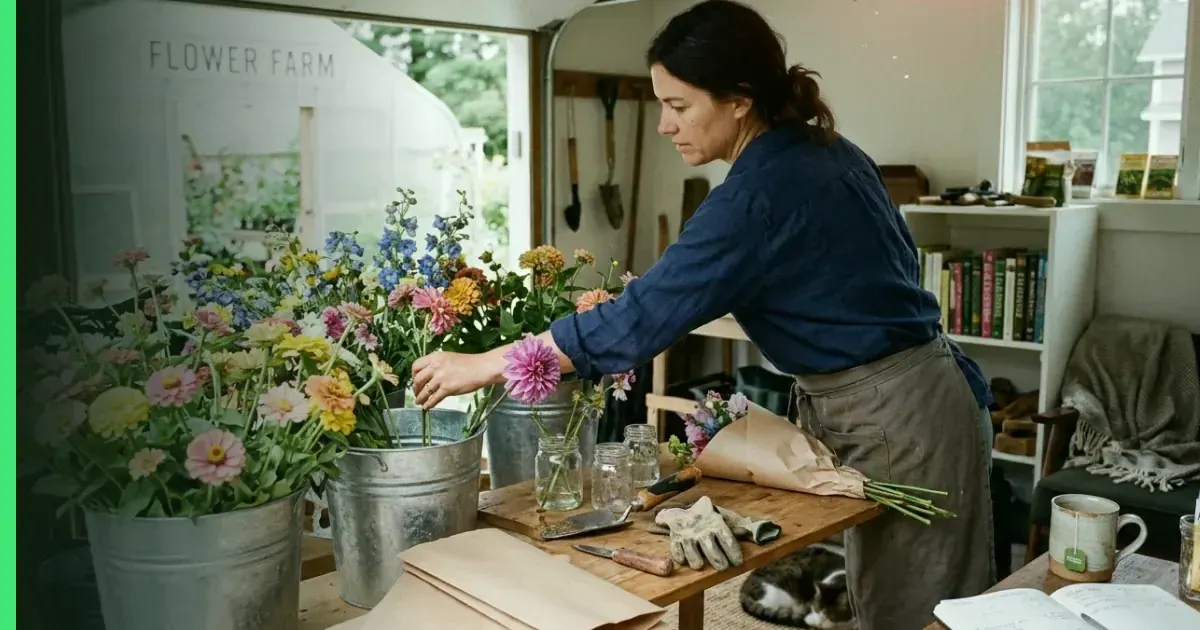
Buying flowers directly from a grower cuts out the middleman and gives you access to blooms at their freshest. Harvest Moon Floral Art explores how to find growers near you, what to ask before you visit and how the buying process differs from a florist or market stall. You get stems that were cut hours earlier, a wider choice during peak season and often a lower price per stem.
Finding Growers Who Sell to the Public
Not every flower farm sells directly to individuals. Many supply wholesale markets or florists under contract and have no retail operation. The ones that do often advertise through local farmers' markets, community-supported agriculture schemes or social media pages that announce what is ready each week.
Farm gate sales happen on the grower's own land, where you collect what you have ordered or choose from buckets of fresh-cut stems. Some farms run seasonal open days when the main crop is in full bloom. Others operate on a collection-by-appointment basis, with orders placed by phone or through a website the day before.
Word of mouth works well in rural areas. Florists who use British-grown flowers can often point you to the farms they source from, and those farms may welcome direct customers outside their wholesale hours.
Timing Your Visit Around Growing Seasons
Growers sell what is in season on their land. A farm specialising in dahlias will have stems from midsummer through to the first frost, but nothing in spring. British tulip growers cut from late winter into spring; peony farms have a short window in early summer.
Visiting outside these windows means empty fields and no stock. Many growers post weekly updates on their flowering schedule, so you know when to make contact. If you need flowers for a specific date, ask about availability at least a fortnight ahead. Weather affects bloom timing, and a cold snap can delay a crop by days or weeks.
Peak Hours and Collection Windows
Growers cut early in the morning while stems are turgid and full of moisture. If the farm offers same-day collection, you will be asked to arrive after the cutting is finished but before the afternoon heat. Missing your collection slot can mean wilted stems or a cancelled order, because the grower has no cold storage beyond their working day.
What to Expect When You Arrive
Farm gate sales are informal. You may be handed buckets of cut stems to choose from, or shown into a polytunnel where you can pick your own. Expect mud, uneven ground and no shelter from rain. Bring cash, because card readers are not universal on small farms.
Stems are sold as they come off the plant: foliage intact, no arranging, no ribbon. You judge freshness by the same signs you would use at a market – firm petals, upright heads, no browning at the stem base. The grower may offer guidance on conditioning and vase life, but that is a courtesy rather than a service you can rely on.
Packaging and Transport
Bring your own buckets or boxes if the grower does not supply them. Stems need to travel upright with their bases in water, or wrapped in damp paper if the journey is short. A car boot without padding will bruise delicate blooms, so line it with old towels or cardboard.
Steps for Making Contact
- Search for flower farms within an hour's drive using local directories, farmers' market listings or social media hashtags for your county and "British flowers".
- Call or message to ask whether they sell direct to individuals, what is currently in season and whether they take orders or offer walk-in sales.
- Confirm the minimum quantity – some farms sell by the bunch or bucket, not by the single stem.
- Arrange a collection time and ask what form of payment they accept.
- Arrive with transport that keeps stems upright and protects flower heads from wind and sun.
Pricing and Minimum Quantities
Growers price by the stem, the bunch or the bucket. A bunch is whatever the grower ties together, which varies by stem length and flower size. A bucket holds as many stems as fit without crushing.
Buying direct does not always mean cheaper. You save on florist markup, but you lose the convenience of mixed bunches and the option to buy three stems of one variety. If the minimum order is a full bucket and you only need a handful, the saving disappears.
| Purchase method | Freshness | Variety choice | Minimum quantity |
|---|---|---|---|
| Direct from grower | Cut that morning | Limited to what is in season on that farm | Often a full bunch or bucket |
| Market stall | Cut within a day or two | Multiple growers represented | Single stems available |
| Florist | Varies by supplier | Wide range including imports | Any quantity, arranged if needed |
Conditioning and Care After Collection
Stems bought from a grower need immediate conditioning. They have not been in water since they were cut, and the clock is running. Strip foliage from the lower half of each stem, recut the base at an angle and plunge them into deep water in a cool room.
Leave them to drink for several hours before arranging. This hydration period stabilises the stems and extends vase life. Skip it and you risk early wilting, especially with roses, tulips or anything cut in warm weather.
Wastage and Imperfect Stems
Growers do not grade every stem to florist standard. You may find bent necks, short stems or blooms that opened faster than expected. These are part of buying direct. Allow a small wastage margin when calculating how many stems you need for an arrangement.
Varieties You Won't Find Elsewhere
Small-scale growers often plant unusual cultivars that wholesalers ignore – scented sweet peas in heritage colours, double-flowered cosmos or single-variety dahlia beds in shades florists never stock. This is where buying from flower growers gives you an edge. You get access to blooms chosen for beauty and scent rather than shipping tolerance.
Ask what the grower is trialling or what they grow for their own use. These varieties are the ones they are proud of, and they may cut you a sample bunch if the timing is right.
Building a Relationship With a Local Farm
Repeat customers get first refusal on sought-after varieties and advance notice when a new crop is ready. If you buy regularly through the season, mention it when you first make contact. Growers remember people who turn up on time, handle stems carefully and respect the rhythm of the farm.
Some farms offer standing orders for weekly or fortnightly collection. You pay a set amount and receive whatever is at its best that week. This works well for anyone who arranges flowers at home as a regular practice, and it takes the guesswork out of availability.
When Direct Buying Doesn't Suit
Buying flowers directly from a grower demands flexibility. You cannot choose colours weeks in advance, and you cannot guarantee a specific variety will be ready on a fixed date. For weddings or formal events where exact shades and flower types are part of the brief, a florist with wholesale access offers more control.
Distance matters too. If the nearest flower farm is an hour away and you need stems every week, the fuel cost and time outweigh the saving. Direct buying suits people who live near growing areas, who can be flexible about what they take home and who value freshness over convenience.
#British grown #Fresh flowers #Seasonal flowers #Conditioning
Download PDF: Your Checklist for Buying Flowers From a Grower PDF, 30 KB
Frequently asked questions
How do I find flower farms that sell direct to the public?
Search local farmers' market listings, social media hashtags for your county plus "British flowers", and community-supported agriculture directories. Florists who use British-grown stems can also point you to their suppliers, many of whom welcome direct customers outside wholesale hours.
What is the best time of year to buy flowers from a grower?
It depends on what the grower plants. British tulips are available from late winter into spring, peonies in early summer and dahlias from midsummer to the first frost. Contact the farm to ask what is in season, because each crop has a short peak window.
Are flowers cheaper when you buy them straight from the farm?
Not always. You save on florist markup, but many farms have minimum quantities such as a full bucket or bunch, so if you only need a few stems, the overall cost can be similar. Savings are clearest when you need large quantities.