Preventing lily pollen stains – the timing and technique that protects your spaces
 Save
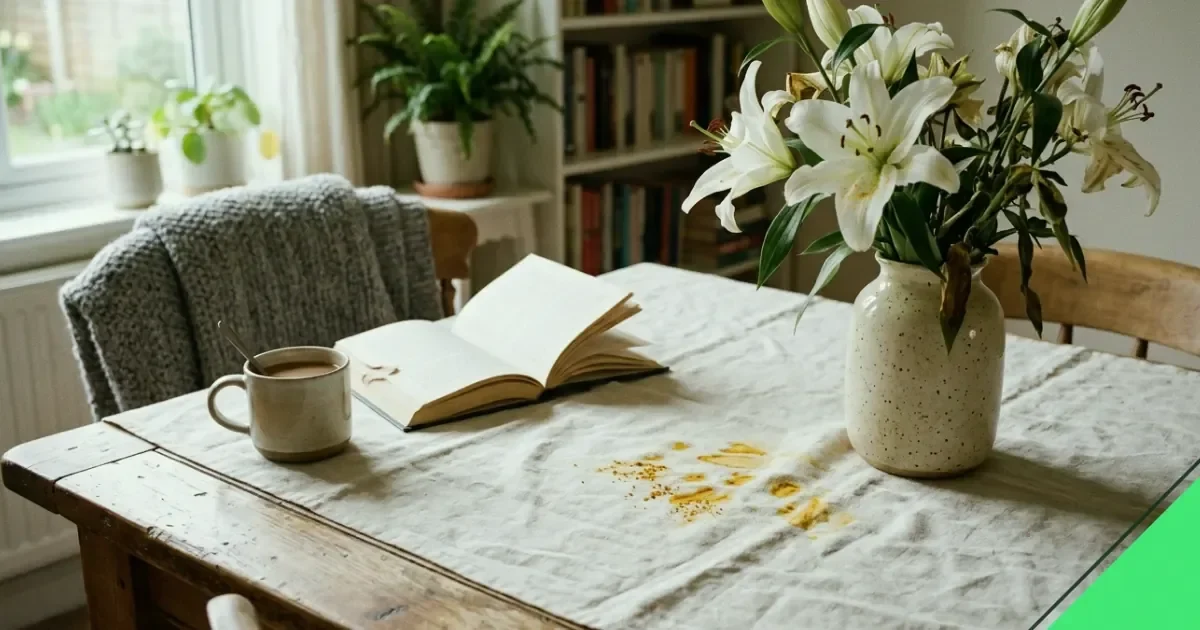
Lily pollen stains fabrics, furniture and surfaces with an orange or yellow mark that sets permanently once it dries. The best solution is prevention: removing the stamens before pollen releases, or choosing lilies that shed less pollen altogether. If a stain does happen, the sooner you act the better your chances of lifting it without damage.
At Harvest Moon Floral Art, we work with lilies constantly, and staining is one of the most common questions we hear. This article walks you through when to remove stamens, how to do it without damaging the bloom, what to do if pollen does fall, and how to choose lilies that pose less risk in the first place.
Understanding where lily pollen comes from
Each lily flower carries multiple stamens – the rod-like structures clustered at the centre of the bloom. The stamen is made up of a thin filament topped with an anther, the part that holds the pollen. When the flower matures, the anther opens and releases pollen as a fine powder.
The pollen itself is sticky and designed by nature to cling to anything it touches – including your sofa, your clothes and your hands. Once it dries, the stain is difficult to shift without risking damage to the fabric. This is why prevention is far more effective than cure.
When to remove the stamens
The ideal time to remove stamens is as soon as the flower opens, before the anther has released pollen. At this stage, the anther is usually bright yellow or orange and tightly closed. If you wait until the anther has split open and begun releasing pollen, you risk spreading it across your fingers and the rest of the flower.
Check your lilies daily once they arrive. The earlier you catch them, the easier and cleaner the job. If you've bought them from a florist, ask whether the stamens have already been removed – many florists do this as standard on arrangement work.
How to remove stamens without damaging the bloom
The technique is simple, but precision matters. You'll need a clean pair of small scissors or florist's snips, and ideally a damp cloth or paper towel nearby.
- Wait until the flower has fully opened and the petals are starting to relax slightly – this usually happens a day or two after the lily arrives.
- Lean over the sink or a waste bin to catch any pollen that falls.
- Gently grip one stamen at the base, close to where it joins the centre of the flower, and snip it off cleanly with a single cut.
- Move to the next stamen and repeat, working around the cluster until all are removed.
- Wipe your hands and the surrounding petals with a damp cloth to remove any loose pollen.
- Discard the stamens in the bin and wash your hands.
Work slowly and avoid tugging or bending the stamens – you want a clean cut that doesn't disturb pollen or bruise the petals. Some people prefer to use their fingers and gently snap the stamens off at the base, but scissors give you more control and a neater result.
What to do if pollen has already fallen
If pollen has landed on fabric or upholstery, resist the urge to rub it or brush it away immediately. Rubbing spreads the pollen and drives the stain deeper into the fibres.
Instead, use a piece of clear sticky tape – the wider the better. Press it gently onto the pollen, hold it there for a few seconds, then peel it away slowly. The tape will lift much of the loose pollen before it sets. Repeat with a fresh piece of tape if needed.
If pollen has landed on your skin or clothes, wash the area gently with cool water and mild soap. Warm water can set the stain, so keep the temperature cool. For clothes, treat the stain as soon as possible and avoid putting the garment in the dryer until the stain has fully lifted.
Choosing lilies that shed less pollen
Not all lilies release pollen equally. Some varieties are bred to produce little or no pollen, which makes them safer for spaces where staining is a real concern – homes with light fabrics, valuable pieces or surfaces you want to keep pristine.
When you're buying lilies, ask whether the variety is a low-pollen or sterile cultivar. Many double lilies – those with extra layers of petals – produce minimal pollen because the stamens have been replaced with additional petals. Some single varieties, particularly certain Oriental and Asiatic hybrids, are also bred for low pollen production. Your florist will know which varieties in stock are the safest choice for your situation.
Protecting furniture and surfaces
Even with stamens removed, lilies still release other particles and can occasionally drop water or nectar. If you're displaying lilies in a high-risk location – near white upholstery, antique wood or expensive fabrics – consider a few protective steps.
Place the vase on a mat or coaster that sits under the arrangement. Change the water regularly to avoid any accidental spillage. Position the vase where petals that naturally fall won't land on sensitive surfaces. Keep lilies away from direct sunlight and draughts, which can speed up petal drop and increase the risk of debris landing nearby.
Comparing approaches to lily pollen safety
| Approach | Timing | Best for |
|---|---|---|
| Remove stamens before pollen releases | Within a day or two of the flowers opening | Any space; most effective prevention |
| Choose low-pollen varieties | When buying the flowers | Homes with delicate fabrics; permanent solution |
| Use tape to lift loose pollen | Immediately after pollen falls | Fresh pollen before it sets |
| Position vase safely | During arrangement | Added protection alongside other steps |
Reviving lilies after stamen removal
Removing stamens doesn't harm the flower or shorten its vase life. In fact, the bloom will often last longer because the plant isn't expending energy on pollen production. The flower will continue to open and the petals will develop their full colour and texture over the following days.
The only visible change is that the centre of the flower looks less crowded without the stamens. This can actually make the bloom appear more elegant, with the inner petals and markings more visible. For arrangement work, this cleaner look is often preferred.
Continue to care for your lilies as you normally would – fresh water every few days, removal of any yellowing outer petals, and a cool location away from direct sun. The absence of stamens makes no difference to these routines.
Download PDF: Lily pollen prevention checklist PDF, 28 KB
Frequently asked questions
Can you remove lily stamens after the flower has opened fully?
Yes, but it's riskier. The anther will have started releasing pollen, so you're more likely to spread it. The best time is within a day or two of the flower opening, when the anther is still closed and tightly sealed.
What's the difference between removing stamens and choosing a low-pollen variety?
Removing stamens is a one-off task you do to each flower once it opens. Choosing a low-pollen variety is a permanent solution – those lilies naturally produce very little pollen from the start, so you get the same safety across the entire vase life without any work.
Will lily pollen stains come out of fabric once they've dried?
It's much harder to remove once dry. Fresh pollen lifts easily with sticky tape, but dried stains often set into the fibres permanently. This is why catching and treating the stain immediately gives you the best chance of lifting it without damage.