Christmas Floristry and Seasonal Design
 Save
Christmas brings a wealth of opportunities for floristry work, from traditional wreaths and garlands to contemporary table arrangements that capture the warmth of the season. Whether you're arranging flowers for your own home or taking commissions, understanding seasonal materials and design principles helps you create pieces that last through the festivities. This guide from Harvest Moon Floral Art covers the flowers, foliage and techniques that define festive floristry.
Seasonal flowers and foliage
Winter offers a surprising range of British-grown and imported materials. Amaryllis delivers bold colour and architectural form, while anemones, ranunculus and hellebores provide softer tones. Roses remain available year-round, but winter varieties often have tighter, more compact heads that suit formal designs.
Foliage carries much of the visual weight in Christmas work. Spruce, pine, fir and cedar bring scent and texture; eucalyptus and olive branches add silvery contrast; holly, ivy and mistletoe connect to tradition. Many florists combine several types of foliage in a single piece to build depth and interest.
Wreath construction
A wreath begins with a frame—wire, willow or foam—chosen to match the style and weight of the materials. Fresh foliage is attached in small bunches, each overlapping the stems of the previous layer, working in one direction around the frame. Secure with florist wire or pins, keeping the attachment points hidden.
Flowers and decorative elements go on last, once the base is full and even. Cluster blooms in groups of three or five rather than scattering them evenly; this creates rhythm and prevents the design feeling too predictable. Mist the finished wreath daily if it will hang indoors, and keep it away from direct heat.
Table centrepieces for festive gatherings
A centrepiece must sit low enough for guests to see and speak across the table. Aim for a finished height no taller than the width of a wine glass. Foam or a shallow dish supports the stems; condition all materials in water for several hours before you begin.
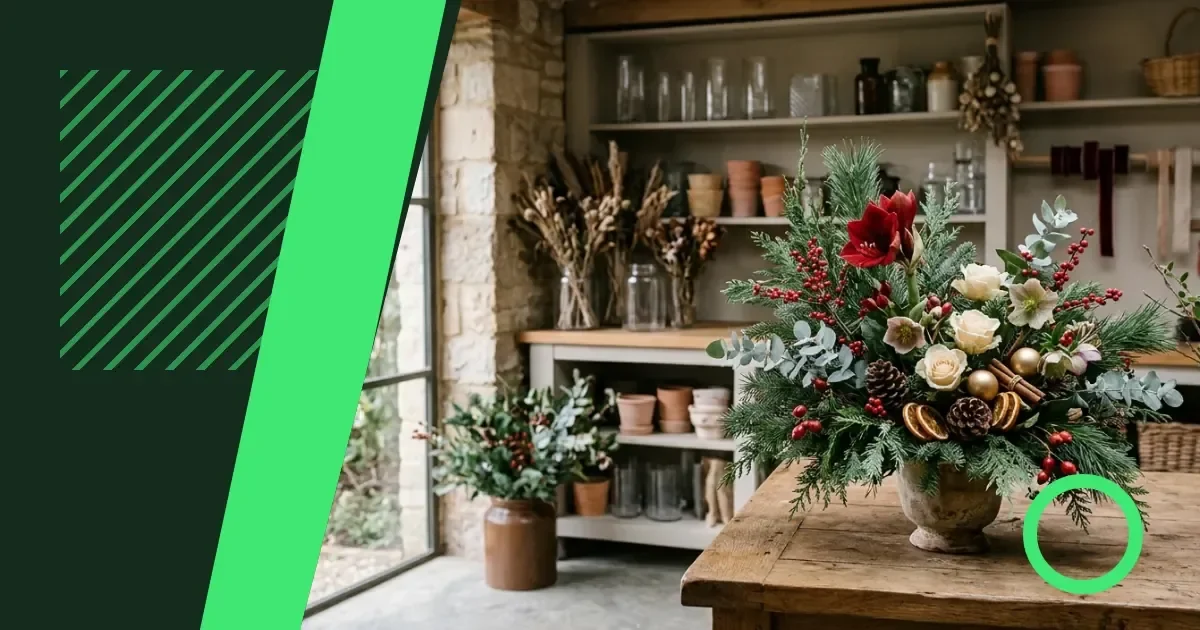
Start with foliage to establish the shape—often a low dome or an elongated oval—then add focal flowers at varied heights to avoid a flat appearance. Tuck smaller blooms and berries into gaps, and finish with candles or decorative ribbon if the design calls for it. Check water levels daily; foam dries quickly in heated rooms.
Garlands and mantelpiece designs
Garlands require more material than most people expect. Measure the space first, then add a third to account for curves and draping. For a fresh garland, wire small bunches of foliage onto a rope or chain, working from both ends towards the centre so the direction of the stems remains consistent.
Mantelpiece arrangements often combine a garland base with inserted flowers and trailing ivy or eucalyptus. Secure the garland with florist tape or hidden wire, then add water tubes for any fresh blooms. This approach lets you replace flowers without dismantling the whole piece.
Colour palettes beyond red and green
Traditional red and green remains popular, but many clients now ask for softer or more unusual schemes. Burgundy, plum and copper create a richer, less primary look; white, silver and pale blue suit modern or Scandinavian-inspired interiors; gold, amber and rust tones work well in country settings.
Choose your palette early and let it guide every decision, from ribbon to berries. A restrained scheme often has more impact than a mix of every seasonal colour. If you do combine warm and cool tones, use foliage to bridge them and prevent the design feeling disjointed.
Conditioning and care for longevity
Most Christmas arrangements need to last a fortnight or more. Cut stems at an angle and remove any foliage that will sit below the waterline. Recut woody stems and split them vertically to help water uptake. Amaryllis stems are hollow; turn them upside down and fill with water before plugging the end with cotton wool.
Keep arrangements away from radiators, open fires and direct sunlight. Top up water daily, and mist foliage every other day if the room is dry. Remove any flowers or leaves that begin to brown; this keeps the piece looking fresh and prevents decay spreading to healthy material.
Designing for clients and commissions
Ask about the venue, the colour scheme and any personal preferences before you begin. Some clients want a show-stopping statement piece; others prefer something understated that complements existing décor. Agree on a budget early, and be clear about what is included—delivery, collection of containers, replacement of wilted flowers.
Photograph your finished work in good light, and ask permission to share images if the client is happy. A portfolio of seasonal designs helps secure future commissions, and many florists find that Christmas work leads to wedding and event bookings later in the year.
Frequently asked questions
How far in advance can I make a fresh Christmas wreath?
A wreath made entirely from foliage will last three to four weeks if kept cool and misted regularly. If you add fresh flowers, make it no more than a week before it will be displayed, and choose hardy varieties such as spray roses or chrysanthemums.
What's the best way to attach ribbon to a wreath without it slipping?
Use florist wire to create a small loop on the back of the ribbon, then pin or wire that loop to the wreath frame. Avoid glue, which can look untidy and damages the ribbon if you want to reuse it.
Can I use supermarket flowers for a festive arrangement?
Yes, as long as they are fresh and well-conditioned. Supermarket flowers are often picked early and benefit from a long drink before use. Look for tight buds on roses and amaryllis, and avoid any stems with browning edges or limp foliage.