What happens at a floristry consultation: the 6 questions your florist will ask
 Save
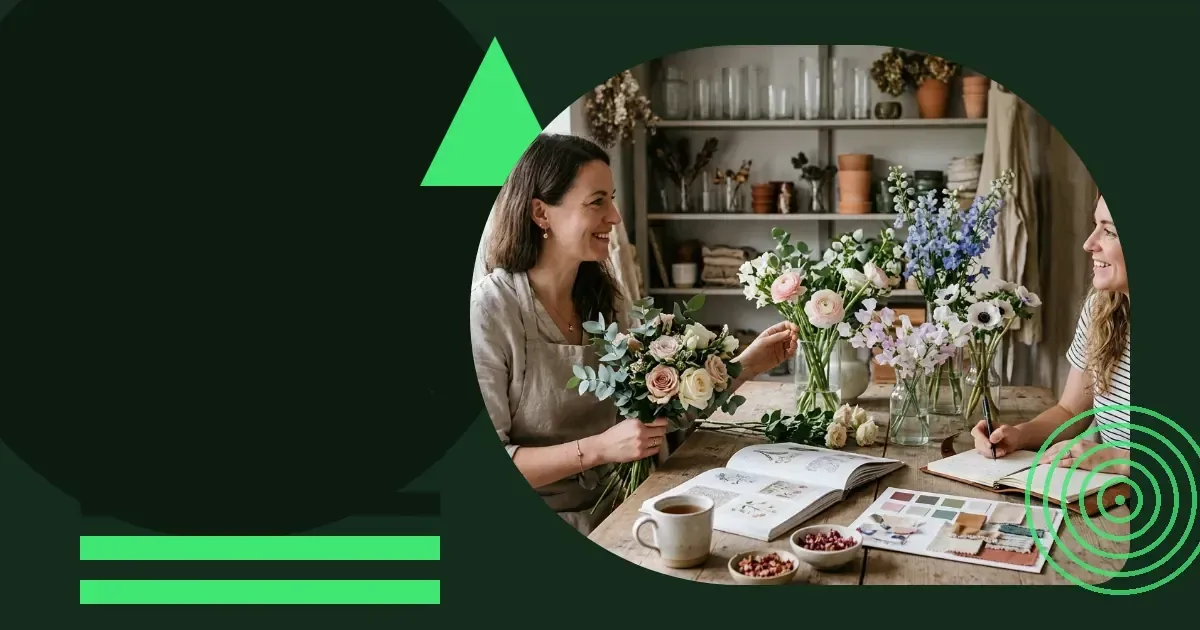
A floristry consultation is a working meeting where you and your florist talk through the purpose, style and budget of your arrangement. You describe what you need, your florist asks questions to understand the setting and mood, and by the end you have a shared plan and a written quote. Harvest Moon Floral Art guides people through this process, whether you are booking wedding flowers, funeral tributes or a one-off centrepiece for your home.
Purpose and occasion
The florist's first question is what the flowers are for. A wedding, a funeral, a corporate event, a birthday dinner and a sympathy arrangement each need different shapes, colours and handling. The occasion shapes the size of the designs, the formality of the style and how many pieces you need. A reception calls for table centrepieces and a bridal bouquet; a funeral may include a coffin spray, standing tributes and buttonholes for close family.
Your florist also asks where the flowers will be displayed and for how long. An outdoor marquee in summer and a church in winter need different varieties. Arrangements that travel or sit in bright sunlight need sturdier blooms. If you are hosting across two days, the florist can suggest flowers with longer vase life and design choices that hold up without constant attention.
Setting and logistics
Next comes the practical detail. Your florist will ask about the venue, the lighting, the table sizes and the number of arrangements you need. Dimensions matter: a tall centrepiece looks dramatic on a round table but may block conversation across a long one. Ceiling height, wall colour and natural light all change how flowers read in a room. The florist may ask for photographs or measurements, or offer to visit the space if it is nearby.
Delivery and setup time are agreed here too. Large installations need access hours before guests arrive. If your venue has restrictions — no candles, no nails in walls, limited delivery windows — mention them now, and your florist can plan around them.
Style preferences and colour palette
This is where you talk through what you like. Your florist may show you photographs of past work, ask about colours you have chosen for the event, or walk you through seasonal options. You do not need to name specific flowers; describing the mood works just as well. Romantic and loose, clean and architectural, wild and textured — each points the florist towards certain varieties and techniques.
Colour is more nuanced than it seems. Warm whites, cool whites, blush, ivory and cream all photograph differently and sit differently against fabric or wood. If you have swatches, paint samples or invitations, bring them. Your florist can match tones or suggest combinations that lift the palette you have already set.
Foliage and texture
Greenery shapes an arrangement as much as the blooms do. Eucalyptus, ivy, ferns and ruscus each give a different feel. Some clients want flowers only; others prefer designs where foliage takes up half the volume. Texture — smooth petals against rough seed heads, glossy leaves next to matte ones — adds depth without extra colour.
Seasonality and availability
Your florist will talk through what is in season at the time of your event. Peonies bloom in late spring, dahlias peak in autumn, tulips arrive in winter and early spring. Seasonal flowers cost less, last longer and suit the weather better than imports flown in from warmer climates. British-grown stock is fresher and often hardier, though choice narrows outside the main growing months.
If your heart is set on a flower that is not in season, your florist can usually source it, but the price rises and the quality may not match what you would get at its natural peak. Many people find that working with the season opens up varieties they had not considered, and the result feels more grounded in the time of year.
Substitutions and flexibility
Flowers are a crop, not a manufactured product. A late frost, heavy rain or supply chain delay can make a planned variety unavailable at short notice. Your florist will ask how much flexibility you have. Some clients want a named list locked in; others are happy for the florist to swap in something similar if the first choice does not arrive in good condition. The more room you give, the better your florist can respond to what is fresh on the day.
Budget and pricing structure
Price comes up early or late in the conversation, depending on how your florist works, but it is always explicit. You may be asked for a target figure, or your florist may describe past projects at different scales so you can see what each budget level delivers. Floristry pricing includes the cost of the flowers, the time to condition and arrange them, delivery, setup and any hired containers or structures.
A written quote breaks down each item: bridal bouquet, bridesmaid posies, buttonholes, centrepieces, ceremony arch. Some florists charge per piece, others per stem or per hour of labour. If you need to adjust the budget, your florist can suggest where to simplify — fewer varieties, smaller arrangements, or a focus on key pieces with greenery filling the rest.
Payment terms and deposits
Most florists ask for a deposit to secure your date, with the balance due a week or two before the event. The deposit is usually non-refundable, because your florist orders stock and blocks out time for your project. Cancellation policies vary, so ask what happens if your plans change. Some florists offer payment plans for larger bookings; others work on a single invoice.
Materials and sustainability
If you have preferences around floral foam, plastic wrapping or single-use mechanics, mention them during the consultation. Many florists now work without foam, using pin frogs, chicken wire and reusable structures instead. These methods take more time and skill, which may affect the quote, but they suit clients who want less waste. You can read more about what floral foam is and why florists are rethinking it on our site.
Some florists source only British-grown or organic flowers; others mix local and imported stock depending on the season. If sustainability matters to you, ask where the flowers come from and how they are transported. A florist who shares your values will be glad to talk through their choices.
What you leave with
At the end of the consultation, you should have a clear picture of what your florist will create and what it will cost. A written quote lists each piece, describes the style and palette, and gives a total with any optional extras noted separately. Some florists include sketches or mood boards; others send follow-up emails with photographs of similar work.
You also leave with a timeline. Your florist will confirm when they need your final numbers, when they will order the flowers, and when delivery or setup will happen. If you are working towards a wedding or large event, you may schedule a second meeting closer to the date to finalise details. For simpler projects, the consultation and quote may be all you need before the day itself.
How to prepare for your consultation
- Gather images of arrangements you like, even if they are not floristry — fabric, interiors, art or landscapes that show the mood you are after.
- Write down the basics: date, venue, number of guests, key pieces you know you need.
- Set a budget range, even a rough one, so your florist can pitch ideas that fit.
- Bring swatches or samples of your colour scheme if you have them.
- List any restrictions — allergies, venue rules, delivery windows — so your florist can plan around them from the start.
- Ask questions about anything you do not understand, from how flowers are conditioned to why one variety costs more than another.
If you are new to booking professional floristry, understanding the difference between a florist and a floral designer can help you find the right person for your project. A good consultation feels like a conversation, not a sales pitch, and you should leave with confidence that your florist understands what you want.
| Type of consultation | Usual length | What you bring | What you leave with |
|---|---|---|---|
| Wedding or large event | One to two hours | Venue details, guest count, mood images, budget | Written quote, timeline, mood board or sketches |
| Funeral or sympathy flowers | Half an hour | Service details, any colour or flower preferences | Quote, delivery confirmation |
| One-off arrangement or subscription | Fifteen to thirty minutes | Occasion, setting, colour ideas | Quote, delivery schedule |
The consultation is the foundation of the working relationship. A florist who listens well, asks the right questions and explains their choices clearly will deliver flowers that match not just your brief but the feeling you had in mind when you first imagined them.
This article is for general information only. Harvest Moon Floral Art is an independent information site about floristry and design, and we do not sell any goods or services.
Download PDF: Your floristry consultation checklist PDF, 30 KB
Frequently asked questions
Do I need to book a consultation before ordering flowers?
Most florists offering bespoke or event work ask for a consultation, especially for weddings, funerals or large installations. For simpler orders like a hand-tied bouquet or subscription, some florists work from a phone call or email instead. It depends on the complexity of what you need.
How much does a floristry consultation cost?
Many florists offer the first consultation free, particularly if you go on to book. Some charge a fee that is deducted from your final invoice if you proceed. For venue visits or detailed design work, there may be a separate charge. Ask when you first enquire.
What if I do not know which flowers I want?
You do not need to name specific varieties. Describing the mood, showing colours you like and talking through the setting gives your florist enough to suggest options. Most people leave the flower choice to the florist once the style and palette are agreed.
Can I change my mind after the consultation?
Yes, up to a point. Small adjustments to colour or style are usually fine if you let your florist know in good time. Larger changes may affect the quote and the order schedule. Once flowers are ordered, options narrow, so raise any doubts as early as you can.
How far in advance should I book a consultation?
For weddings and large events, book three to six months ahead, longer in busy seasons. For funerals, florists often meet you within a day or two of your call. One-off arrangements can usually be discussed a week or two before the date you need them.
What happens if my florist cannot get the flowers we agreed on?
A good florist will contact you as soon as they know there is a problem and suggest an alternative. If you have given flexibility during the consultation, they may substitute something similar without needing to check. If the change is significant, you should be consulted before the final design is made.
Should I bring my partner or family to the consultation?
Bring anyone whose opinion matters to the decision, but keep the group small. Too many voices can make it hard to reach a clear brief. If the flowers are a gift or surprise, go alone or with one trusted person who understands the recipient's taste.