What floral foam is and why florists are rethinking it
 Save
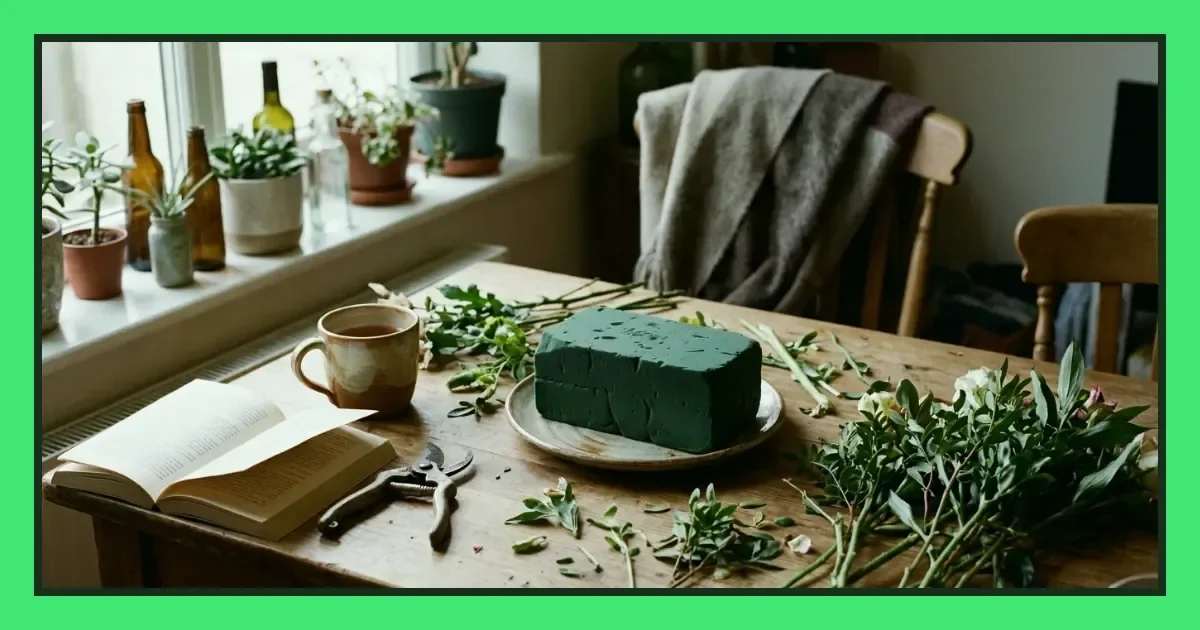
Floral foam is a water-absorbent block that holds flower stems in place while keeping them hydrated. It has been the industry standard for decades, particularly in large displays, funeral work and event floristry, but its environmental impact has prompted many designers to look for alternatives. This guide explains how the material works, where it is still useful, and the practical options available if you prefer not to use it. Harvest Moon Floral Art explores the tools and choices that shape modern floristry.
The material itself
Floral foam is a lightweight, porous synthetic polymer manufactured to absorb water and support cut stems. When soaked, it holds many times its dry weight in water and provides a stable anchor for stems inserted at any angle. The most recognisable form is the green brick, though it also comes as spheres, cones and wreaths. Dry foam, usually brown or grey, is used for dried and silk flowers.
The block is soft enough to pierce with a stem but firm enough to hold weight. Florists cut it to fit containers, secure it with tape or wire, and insert conditioned stems directly into the surface. Once in place, the foam delivers water steadily to each stem without the need for a vase or visible structure.
When and why it is used
Foam excels in situations where flowers must hold a specific shape or direction. Funeral tributes such as wreaths, sprays and casket arrangements rely on it to keep stems horizontal or angled downward. Church pedestals, stage displays and large centrepieces benefit from the three-dimensional freedom foam allows, letting designers build outward and upward without a tall vase.
It is also the quickest solution for high-volume work. Wedding venue floristry, corporate events and same-day funeral orders often leave little time for hand-tying or intricate mechanics. Foam cuts preparation time and allows arrangements to travel without water sloshing or stems shifting.
Occasions that commonly use it
- Funeral and sympathy flowers, especially shaped tributes
- Wedding ceremony arrangements where stems need to cascade or arch
- Large-scale event displays with multiple focal points
- Hanging installations and vertical designs
Environmental concerns around floral foam
The material does not biodegrade. It is made from phenolic foam, a type of plastic that fragments into microplastics over time but never fully breaks down. These particles enter waterways, soil and ecosystems when foam is disposed of or rinsed under a tap. The manufacturing process also raises concerns about energy use and chemical by-products.
Many local councils do not accept floral foam in household recycling, and landfill remains the most common endpoint. Awareness of these issues has grown steadily since the late twenty-tens, with several European countries restricting or planning to phase out single-use foam in floristry. Some florists have stopped using it altogether; others reserve it for specific commissions where no alternative works as reliably.
Alternatives to foam
Switching away from foam often means returning to older techniques or adopting newer biodegradable products. The right choice depends on the type of arrangement, the flowers involved, and how much time you have. No single substitute replicates foam's versatility, so most florists now use a combination of methods tailored to each job.
| Method | Best for | Considerations |
|---|---|---|
| Chicken wire and moss | Natural, organic-looking designs; wreaths and urns | Takes longer to set up; needs secure fixing |
| Pin frogs and kenzan | Low, modern arrangements; ikebana-style work | Heavy; works best in shallow, stable containers |
| Hand-tied in water | Vase arrangements; bouquets placed into containers | Limits three-dimensional shaping |
| Biodegradable foam | Situations where traditional foam was essential | More expensive; performance varies by brand |
Chicken wire and moss
Crumpled chicken wire creates a grid inside a container, holding stems at different angles while allowing water to circulate. When paired with soaked moss, it mimics some of foam's support without the plastic. This combination suits urn arrangements, funeral tributes and naturalistic designs where a little visible mechanics blends into the look. It requires more preparation and a steady hand, but the materials are reusable or compostable.
Pin frogs
A pin frog, or kenzan, is a heavy metal base studded with upright pins. Stems are pushed onto the pins and held firmly in place. Originally used in Japanese flower arranging, pin frogs work beautifully for low, sculptural designs in wide, shallow dishes. They last indefinitely and suit minimalist aesthetics. The downside is weight and the need for a stable container; they are less practical for tall or cascading work.
Biodegradable foam products
Several manufacturers now produce foam-like blocks made from plant-based materials or biodegradable polymers. These products soak up water and hold stems in much the same way as traditional foam, then break down in compost or soil over time. Performance varies: some crumble more easily, others do not hold water as long. They tend to cost more and may not be stocked by every supplier, but they offer a direct swap for florists unwilling to give up the speed and flexibility foam provides.
Practical steps for working without foam
If you are ready to reduce or stop using foam, the transition is easier with a plan. Start by assessing which arrangements genuinely need the three-dimensional freedom foam offers, then experiment with alternatives on smaller, lower-stakes projects before committing to client work.
- Audit your current work and identify designs that could move to hand-tied or pin-frog methods without compromising the result.
- Invest in reusable mechanics: chicken wire, pin frogs in several sizes, floral tape and sturdy containers.
- Practise building a chicken-wire armature in an urn or low bowl, securing it with tape or wire around the rim.
- Condition your stems thoroughly, as proper conditioning becomes even more important when foam is not delivering constant moisture.
- Set expectations with clients if a design will look different or take longer; transparency builds trust.
- Reserve biodegradable foam or traditional foam for commissions where no other method meets the brief, and dispose of it responsibly.
How to handle client requests
Some clients will ask specifically for foam-free work; others may not know it was ever in question. When a customer requests a shaped tribute or a cascading display, explain what mechanics you plan to use and how it affects the design. Most people appreciate honesty, and many are willing to adjust their expectations once they understand the environmental trade-off.
For funeral work, sensitivity matters. Families under stress may not want a conversation about materials, and a florist's role is to deliver what has been asked for with care. If you choose to continue using foam in these situations, that is a legitimate decision. If you prefer not to, suggest alternative shapes—such as a tied posy in a bowl or a naturalistic urn—that work without it.
Where the industry is moving
Professional floristry bodies and training courses increasingly cover foam-free techniques, and several high-profile designers have publicly committed to phasing it out. That shift has made alternatives more visible and more commercially acceptable, but the change is gradual. Small independent florists often lead the way, while larger event companies and supermarket concessions move more slowly due to volume and cost pressures.
Regulation may accelerate the transition. Some European markets have introduced or proposed restrictions on single-use plastics in floristry, and UK suppliers report rising demand for biodegradable options. Even without a ban, customer awareness is growing, and many now ask what materials were used before placing an order.
Download PDF: Your foam-free floristry checklist PDF, 29 KB
Frequently asked questions
How do you soak floral foam properly?
Place the foam block on the surface of a basin or bucket of water and let it sink under its own weight. Do not push it down, as this traps air pockets that leave stems dry. It takes a few minutes to saturate fully.
Can floral foam be reused?
Technically yes, but each use weakens the structure and leaves holes that reduce support. Reused foam is less reliable and more likely to crumble, so most florists treat it as single-use.
What are the best alternatives to floral foam for beginners?
Start with hand-tied bouquets placed in vases, which require no mechanics beyond a sharp pair of secateurs and clean water. Once comfortable, try a pin frog in a shallow dish for a simple, low arrangement.