Conditioning flowers: 6 prep steps for stronger stems and longer vase life
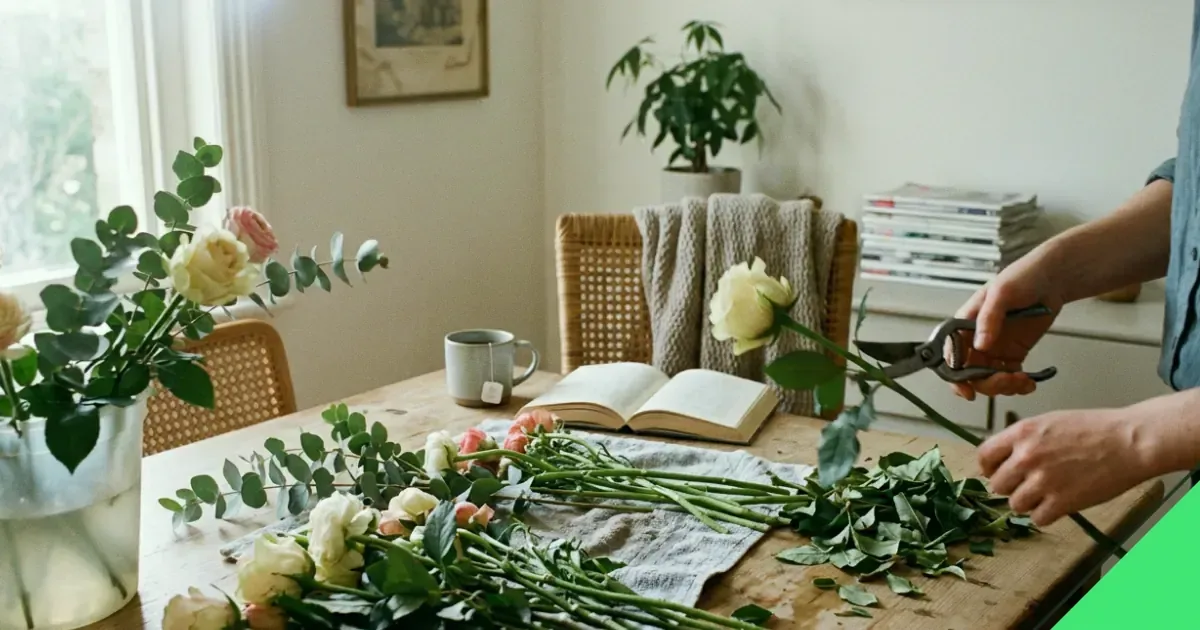 Save
Conditioning flowers means preparing cut stems so they take up water efficiently and stay fresh longer in an arrangement. Professional florists condition every stem before design work begins, and the same steps work for bought or garden-cut blooms. At Harvest Moon Floral Art, we treat conditioning as the foundation of any arrangement that lasts beyond a few days.
Why conditioning matters
A freshly cut stem seals itself within minutes as sap and air block the vascular tissue. Conditioning reopens those channels and removes anything that stops water reaching the flower head. Without it, even a stem stood in clean water can wilt by the next morning.
Conditioned stems drink steadily and hold their shape under the weight of petals and foliage. Arrangements built on well-prepped flowers need less adjustment and fewer replacements over the week.
The difference you see
Unconditioned roses often develop bent necks where the head droops below the top of the stem. Tulips flop or grow in unexpected directions. Peonies that looked tight in the shop open unevenly or not at all. Conditioning reduces each of these.
Tools and materials
You need sharp secateurs or floristry scissors, a clean bucket, room-temperature water and a flat surface for trimming. A sharp blade matters: blunt tools crush the stem rather than cutting it cleanly, and crushed tissue struggles to take up water.
Keep a separate bucket for woody stems such as lilac or viburnum if you plan to split or hammer the ends. Some florists add flower food to the conditioning water; others save it for the final vase.
Step-by-step conditioning
These steps take between ten and thirty minutes depending on the number of stems and the condition they arrive in. Work through them in order for the best result.
- Strip the lower leaves. Remove any foliage that would sit below the waterline in your bucket. Submerged leaves rot quickly, cloud the water and encourage bacterial growth that blocks the stem.
- Cut the stems at an angle. Use a sharp blade and cut at least a centimetre from the existing end, slicing at a forty-five-degree angle. The slant increases the surface area available for water uptake.
- Make the cut under water. Where possible, trim the stem while holding it submerged in a shallow bowl or directly in the bucket. This prevents air entering the vascular tissue at the moment of the cut.
- Place stems in deep water immediately. Stand them in a bucket filled two-thirds with room-temperature water. Cold water slows uptake; very warm water can shock delicate petals.
- Let them drink for at least two hours. Leave the bucket in a cool room away from direct sun or draughts. Many florists condition overnight, particularly for event work.
- Re-cut before arranging. Just before you begin your design, trim a thin slice from each stem end to remove any seal that formed during conditioning.
Woody stems
Branches and stems with bark benefit from an additional step. After cutting at an angle, split the bottom few centimetres vertically with your blade or lightly hammer the end to splay it. Both methods expose more of the inner tissue to water.
Common mistakes and how to avoid them
Leaving flowers out of water for more than a few minutes undoes the benefit of a fresh cut. Air enters the stem and creates a blockage that conditioning is meant to prevent. If you need to transport stems, wrap the ends in damp tissue or stand them in a small bottle of water.
Overhandling the stem ends transfers oils from your skin and can introduce bacteria. Hold stems by the middle or upper portion when possible, and wash your hands before starting.
Reusing water
Change conditioning water daily if you are holding flowers for longer than a day. Bacteria multiply quickly in stale water, even when no leaves are submerged. Rinse the bucket between refills.
How conditioning extends vase life
A well-conditioned stem can last up to twice as long as one placed straight into a vase. The difference is most visible in the second half of the arrangement's life, when untreated stems droop or discolour while conditioned ones stay upright.
Roses, tulips and peonies respond particularly well. Woody-stemmed flowers such as lilac and cherry blossom need conditioning to open at all once cut. For more on working with prepared stems, see hand-tied bouquet techniques.
Timing and planning
Condition flowers the evening before an event or arrangement session. This gives stems time to hydrate fully without adding pressure to the day itself. Florists working on wedding or funeral flowers often condition in batches across several days as deliveries arrive.
If you buy from a florist or supermarket, ask when the stems were last cut. Flowers sold in water have usually been conditioned already, but a fresh cut at home still helps. Supermarket bunches wrapped in cellophane benefit from full conditioning as soon as you unwrap them.
Conditioning vs arranging
These are separate tasks. Conditioning prepares the raw material; arranging shapes it into a design. Trying to do both at once means stems spend too long out of water, and you lose the advantage of proper prep. For guidance on building arrangements with conditioned stems, visit the posy-making guide.
| Approach | When to use | Main benefit |
|---|---|---|
| Standard cut and soak | Most soft-stemmed flowers | Simple, effective for everyday arranging |
| Underwater cutting | Roses, tulips, stems that wilt easily | Prevents air blockages |
| Splitting or hammering | Woody branches, lilac, viburnum | Exposes more tissue to water |
| Overnight soaking | Event flowers, large orders | Maximum hydration before design work |
Seasonal notes
British-grown seasonal flowers often arrive in better condition than imports because they travel shorter distances. Spring tulips and daffodils need less conditioning time than roses flown in from warmer climates. Summer garden pickings can go straight from the border into water if you cut them early in the morning while stems are still turgid.
Winter branches take longer to condition. Bare stems such as dogwood or pussy willow need a full day in deep water before they are pliable enough to arrange without snapping.
#Conditioning #Stem care #Vase life #Fresh flowers
Download PDF: Flower conditioning checklist PDF, 28 KB
Further reading
Frequently asked questions
How long should you condition flowers before arranging them?
At least two hours in deep water after cutting the stems at an angle. Many florists condition overnight, especially for event work, to ensure stems are fully hydrated.
What does it mean to condition cut flowers?
Conditioning prepares cut stems so they take up water efficiently. It involves stripping lower leaves, cutting the stem at an angle, and letting it drink in a bucket before you begin arranging.
Do you need to condition flowers bought from a florist?
Florist-bought stems are often pre-conditioned, but a fresh angled cut at home and a few hours in clean water still improve vase life. Supermarket flowers wrapped in cellophane benefit from full conditioning.