What a posy is and how to arrange one in 6 steps
 Save
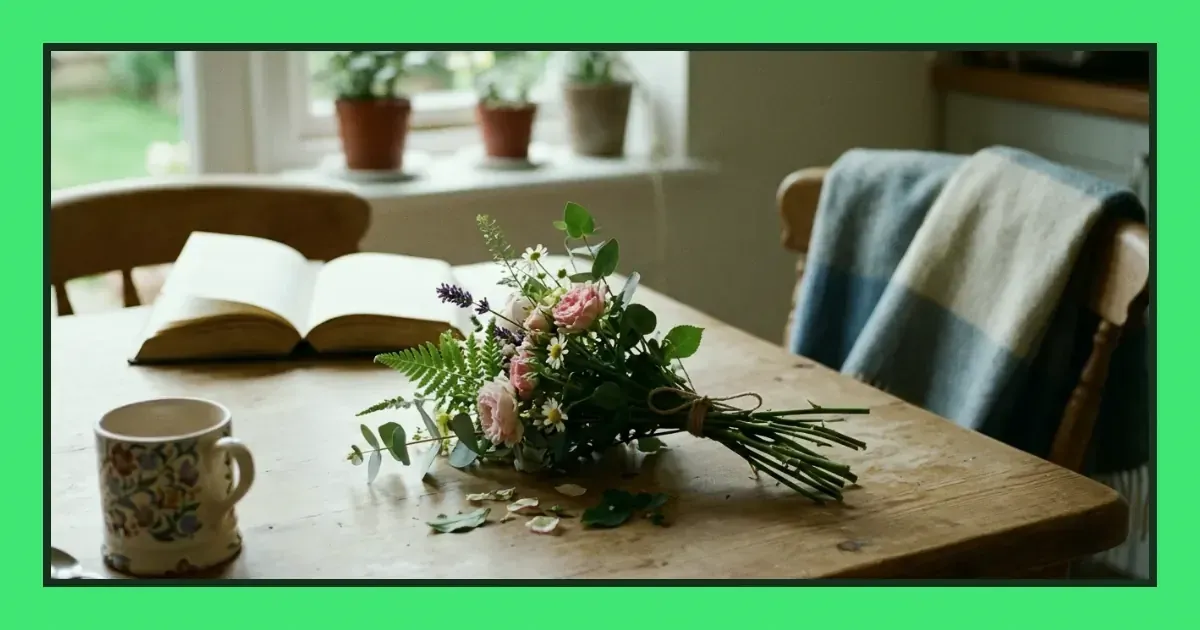
A posy is a small, hand-held bouquet arranged in a rounded dome shape, compact enough to fit comfortably in one hand. Traditionally given as tokens of affection or sympathy, posies remain popular for weddings, informal gifts and table arrangements because they require fewer stems than larger designs and travel well. Harvest Moon Floral Art walks you through the structure, the occasions that suit them and the method for making one at home.
Origins and traditional uses
Posies have been exchanged in Britain for centuries, often carrying symbolic meanings through the choice of flower. The name comes from "poesy," an old word for a short verse or sentiment, reflecting the messages these small bouquets once conveyed. Victorians formalised the practice with elaborate flower languages, but the format itself is much older.
Today the posy remains a practical choice when space or budget is limited. Bridesmaids carry them because they are light and easy to hold during long ceremonies. Sympathy posies suit bedside tables or small memorial settings. Informal gift posies fit through letterboxes when wrapped carefully.
Structure and defining features
A posy is recognised by its compact, domed silhouette and even distribution of flowers. Unlike a hand-tied bouquet that fans outward, a posy keeps its stems tightly gathered and its blooms close together, creating a near-spherical head. The stems are usually cut short and bound at a single point.
Most posies measure between twelve and eighteen centimetres across the flower head. Anything larger begins to feel like a standard bouquet; anything smaller risks looking sparse unless you choose small blooms like spray roses or sweet peas.
Flowers that work best
Choose flowers with sturdy stems and heads that sit at a similar height. Roses, spray carnations, ranunculus and freesias all hold their shape well in a tight bunch. Avoid heavy-headed flowers like large dahlias or dinner-plate chrysanthemums, which tip forward when the stems are short.
Seasonal British-grown stems suit the format: tulips in spring, sweet peas in summer, dahlias in autumn. Condition all flowers by cutting stems at an angle and standing them in clean water for at least two hours before you arrange.
Step-by-step construction method
Making a posy requires no special equipment beyond secateurs, florist tape or twine, and a small bowl of water. Work on a clean surface at a comfortable height and strip all foliage that will sit below the binding point.
- Select one central flower and hold it upright between your thumb and forefinger, just below the bloom.
- Add flowers in a spiral around the centre, rotating the bunch a quarter turn after each stem so that each new flower sits slightly lower than the last, creating the dome.
- Keep checking the profile from the side to ensure the rounded shape; if one bloom sticks out too far, ease its stem deeper into the bunch.
- Once you have used all your flowers, secure the binding point tightly with florist tape, wrapping several times to hold the spiral in place.
- Trim the stems to an even length with secateurs, leaving enough to grip comfortably or to fit the vase you plan to use.
- Stand the finished posy in water immediately and store in a cool place away from direct heat or draughts.
The spiral technique distributes weight evenly and prevents the bunch from collapsing. If your first attempt feels loose, unwrap and start again with a tighter grip at the binding point.
Choosing flowers and foliage
A successful posy balances colour, texture and scale. Limit yourself to two or three flower types unless you want a cottage-garden feel, in which case five or six varieties can work if their sizes are similar. Repeating one colour through different flower shapes creates cohesion.
Foliage softens the edges and fills gaps between blooms. Eucalyptus, rosemary and ivy trail naturally; pittosporum and salal provide structure. Strip leaves from the lower half of each stem so the binding point stays clean and the stems do not rot in water.
Seasonal considerations
Spring posies suit lighter colours and smaller blooms like anemones, narcissi and muscari. Summer allows brighter palettes and scented stems such as stocks and sweet peas. Autumn calls for richer tones with chrysanthemums, sedums and berried stems. Winter posies often include evergreens, hellebores and early tulips forced under glass.
Buying flowers in season reduces cost and increases vase life. Supermarket bunches work well if conditioned properly; trim stems and change water daily to keep blooms fresh.
Tools and materials
| Item | Purpose | Alternative |
|---|---|---|
| Sharp secateurs | Clean cuts that do not crush stems | Kitchen scissors for soft stems only |
| Florist tape or twine | Secures the binding point without slipping | Raffia or garden string |
| Low vase or jar | Supports the short stems upright | Tumbler or wide-necked bottle |
Floral foam is not needed for posies. The short stems stand upright in water without additional support, and avoiding foam makes disposal easier and reduces environmental impact.
Common mistakes and how to avoid them
The most frequent error is starting with too loose a grip. If the stems feel wobbly as you add flowers, stop and tighten your hold at the binding point before continuing. A loose bunch will splay outward instead of holding its rounded shape.
Another problem is mixing flower sizes carelessly. Large blooms such as peonies dominate small ones like forget-me-nots, so either commit to one scale or use the larger flowers sparingly as focal points. Uneven stem thickness also causes trouble; thick woody stems push finer ones aside, creating gaps.
Extending vase life
Change the water daily and re-cut stems every other day to prevent bacterial build-up. Remove any flowers that fade before the rest so they do not spoil the remaining blooms. Posies in cool rooms away from radiators last longer than those in warm kitchens.
Wilting often signals an air lock in the stem rather than a lack of water. Re-cut the stem under running water and return it to the vase immediately.
Occasions and presentation
Posies suit settings where formality is not required. Bridesmaids and flower girls carry them because they are light and easy to hold throughout the ceremony. Small posies sit comfortably on bedside tables in hospitals or care homes without overwhelming the space.
Wrap a finished posy in tissue or brown paper, leaving the flower heads visible. Tie with ribbon or twine just below the blooms. For delivery, stand the wrapped bunch in a jar with a little water at the base to keep stems hydrated.
A posy placed in a low vase works as a table centrepiece for informal lunches or suppers. The rounded shape looks complete from every angle, so guests seated around the table each see the same arrangement.
#Hand-tied bouquet #Seasonal flowers #Conditioning
Download PDF: Posy-making checklist PDF, 28 KB
Further reading
Frequently asked questions
How many flowers do you need for a posy?
Between fifteen and twenty-five stems usually create a posy with a full, rounded shape, depending on the size of the individual blooms. Smaller flowers like spray roses or freesias need more stems to fill the dome, while larger heads such as standard roses or ranunculus require fewer.
What is the difference between a posy and a bouquet?
A posy is smaller and more compact, designed to be held in one hand with a rounded dome shape. A bouquet is larger, often fans outward and may include long trailing stems or foliage that extends beyond the binding point.
Can you make a posy the day before an event?
Yes, if you keep the finished posy in water and store it in a cool place overnight. Wrap the stems loosely in damp tissue to prevent them drying out, and avoid sealing the flowers in plastic, which traps moisture and encourages mould.