Five techniques for arranging flowers in a tall narrow vase
 Save
A tall narrow vase limits how you place stems and how much width the arrangement can have at the top. The main challenge is keeping stems stable without crowding them so tightly that air cannot circulate or blooms lose their shape. Harvest Moon Floral Art walks you through five techniques that give you control over proportion, balance and longevity when the container is working against you.
The spiral grip technique
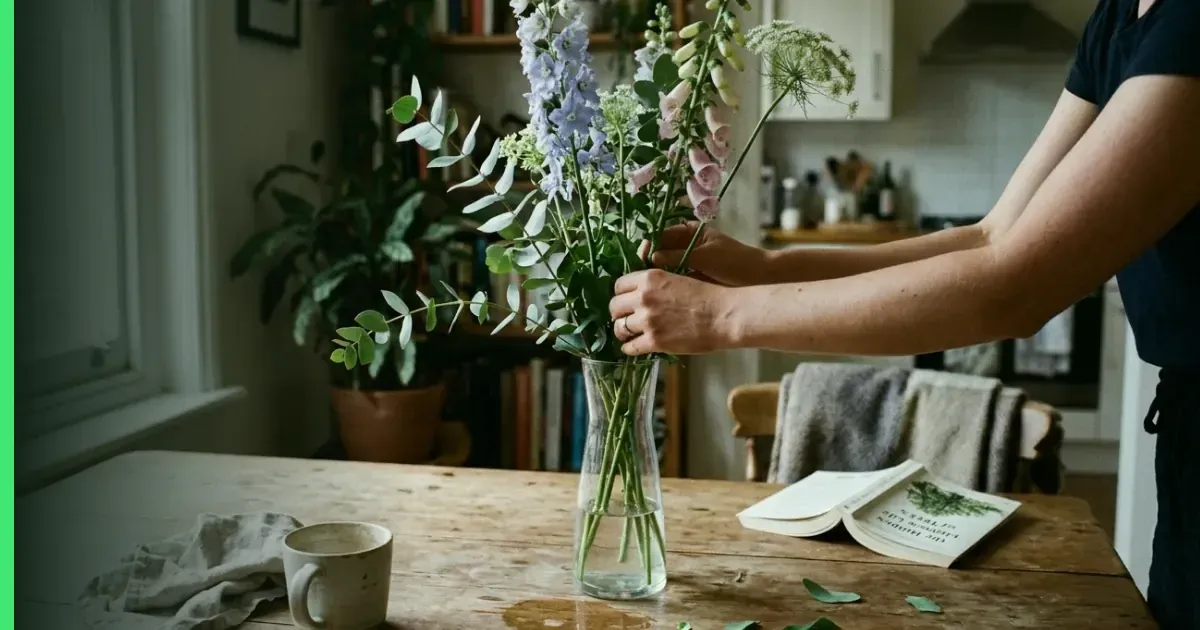
Holding stems at an angle as you add them creates a spiral that locks the bunch in place. Each stem leans slightly, resting against the one before it. The spiral keeps the stems from sliding to one side of the vase and creates space for water to move between them.
Start with the tallest stem, placed off-centre. Add each new stem at the same angle, turning the bunch in your hand as you go. When you lower the bundle into the vase, the stems wedge themselves against the walls without forcing. This works well when the vase opening is narrower than your hand.
Cutting stems to different heights
Stems cut to varied lengths distribute weight through the vase instead of concentrating it at one level. The shortest stems sit low and anchor the arrangement; the tallest ones define the silhouette. Middle-length stems fill the visual gap and prevent the arrangement from looking bottom-heavy or sparse.
A useful starting point: the tallest stem should be roughly twice the height of the vase. From there, step down in small increments. Avoid cutting everything to the same length and then trimming one or two stems shorter as an afterthought; plan the heights before you cut.
Proportion in practice
If the vase stands at shoulder height on a sideboard, you want the tallest blooms to reach just above eye level when someone walks past. A centrepiece on a dining table needs shorter stems so diners can see across it. The vase height sets the lower limit; the room and the occasion set the upper one.
Using the vase neck as a natural grid
A narrow neck holds stems in place without additional structure. The opening acts as a physical constraint, and you can use that to your advantage. Place the first few stems so they cross just below the rim, forming a loose grid. Each new stem slots into a gap between the existing ones.
This technique works best with straight, firm stems that do not bend under their own weight. Roses, lisianthus and spray carnations are good candidates. Softer stems or heavy blooms need more support than the neck alone can give.
Adding internal support with chicken wire
Chicken wire rolled into a loose cylinder and pushed into the vase gives you anchor points for individual stems. The wire sits below the waterline, out of sight, and each stem threads through a different opening. This stops stems from migrating to one side as the arrangement settles.
Cut a piece of wire large enough to fill the neck without packing it solid. Roll it loosely so the openings stay visible. Push it down until it sits just below the rim, then trim any sharp ends that stick up. The wire should feel stable when you press it gently, but not so tight that you cannot push stems through.
When to choose wire over other methods
Wire is useful when stems are soft, hollow or prone to bending. It also helps when you are working with a small number of heavy blooms that would otherwise lean. If you are arranging a handful of peonies or large dahlias, the wire prevents them from toppling sideways as the heads open.
Balancing visual weight
A tall narrow vase can look top-heavy if all the blooms sit at the same height or if one side carries more colour or texture than the other. Visual weight is not the same as physical weight; a single dark bloom or a cluster of small flowers can pull the eye and make the arrangement feel lopsided.
Distribute colour and texture evenly as you add stems. Step back after every few additions and check the arrangement from the front and both sides. If one area looks heavier, add a bloom or a piece of foliage to the opposite side to bring it into balance.
Foliage as a counterweight
Foliage placed low in the arrangement anchors the composition and draws the eye downward. Stems of eucalyptus, ivy or ruscus soften the transition between the vase and the blooms. They also fill gaps without adding bulk, which is useful when the vase opening limits how many stems you can fit.
Step-by-step process for a stable arrangement
- Fill the vase with clean water to just below the rim, leaving room for displacement when you add stems.
- If using chicken wire, roll and insert it now, pressing it down until stable.
- Cut the tallest stem to roughly twice the vase height and place it first, slightly off-centre.
- Add the next few stems at different heights, turning the bunch or angling each stem so they cross below the rim.
- Step back and check the balance from all sides, adjusting stems before adding more.
- Fill gaps with shorter stems or foliage, threading each through the existing structure.
Choosing flowers that suit the container
Some blooms work better in tall narrow vases than others. Stems that are firm, straight and not too leafy are easier to control. Flowers with small to medium heads keep the arrangement from looking crowded at the top.
Roses, lisianthus, tulips, irises and alstroemeria all have the stem strength and proportions that suit a tall narrow container. Large-headed flowers such as hydrangeas or dinner-plate dahlias can work if you use fewer of them and rely on foliage to fill the vase.
| Flower type | Stem strength | Best use in tall narrow vases |
|---|---|---|
| Roses | Firm, straight | Core structure; anchor stems |
| Tulips | Flexible, moves towards light | Grouped for support; short to mid-height |
| Lisianthus | Firm with branching heads | Filler and height without bulk |
| Peonies | Soft, heavy heads | Best with wire support; use sparingly |
Common mistakes and how to avoid them
Overcrowding the vase stops water from reaching every stem and traps air around the cut ends. If you struggle to add another stem without forcing it, the vase is full. Remove one or two stems rather than pushing through.
Cutting all stems to the same length creates a flat top that lacks movement. Even a small difference in height gives the arrangement depth. Leaving too many leaves below the waterline fouls the water and shortens vase life; strip the lower portion of each stem before arranging.
Toppling and how to prevent it
An arrangement topples when the weight sits too high or when stems are not anchored. If the vase feels unstable, add a handful of clean pebbles or marbles to the bottom before filling it with water. The extra weight lowers the centre of gravity and stops the vase from tipping if someone brushes past.
Maintaining the arrangement over several days
Change the water every other day to keep it clear and oxygenated. Lift the whole arrangement out carefully, supporting the stems at the base, and rinse the vase before refilling. Trim a small amount from each stem with clean secateurs each time you change the water; this reopens the vascular tissue and improves water uptake.
Remove any blooms that have faded or started to drop petals. Leaving them in the vase releases ethylene, which accelerates the decline of the remaining flowers. If you find that managing tulips that bend in the vase is part of your routine, refresh the water more often and keep the arrangement away from direct heat.
Adapting the technique to different occasions
A tall narrow vase suits a mantelpiece, a console table or the corner of a sideboard where width is limited but height is welcome. For a dining table, the same techniques work if you cut stems shorter so the blooms sit just above the rim rather than towering over it.
Formal occasions call for symmetry and restrained colour; use fewer varieties and keep the heights close. Casual arrangements benefit from looser structure and varied stem lengths. The mechanics stay the same; the visual feel changes with how tightly you control the placement.
#Spiral technique #Foliage #Vase life
Download PDF: Checklist for arranging flowers in a tall narrow vase PDF, 29 KB
Frequently asked questions
What flowers work best in a tall thin vase?
Roses, lisianthus, tulips, irises and alstroemeria work well because their stems are firm and their blooms are not too heavy. Avoid very large-headed flowers unless you use chicken wire for support and keep the number low.
How do you keep flowers from falling over in a narrow vase?
Use the spiral technique to lock stems together, or add chicken wire inside the vase to anchor each stem individually. Cutting stems to different heights distributes weight and prevents the arrangement from becoming top-heavy.
How tall should flowers be in a tall vase?
A common guideline is to make the tallest stem roughly twice the height of the vase. Adjust based on where the vase sits and whether you need the arrangement to be seen from a distance or kept low for conversation.