Wiring, Binding and Ribbon Work: Creating a Wrist Corsage That Holds Its Shape
 Save
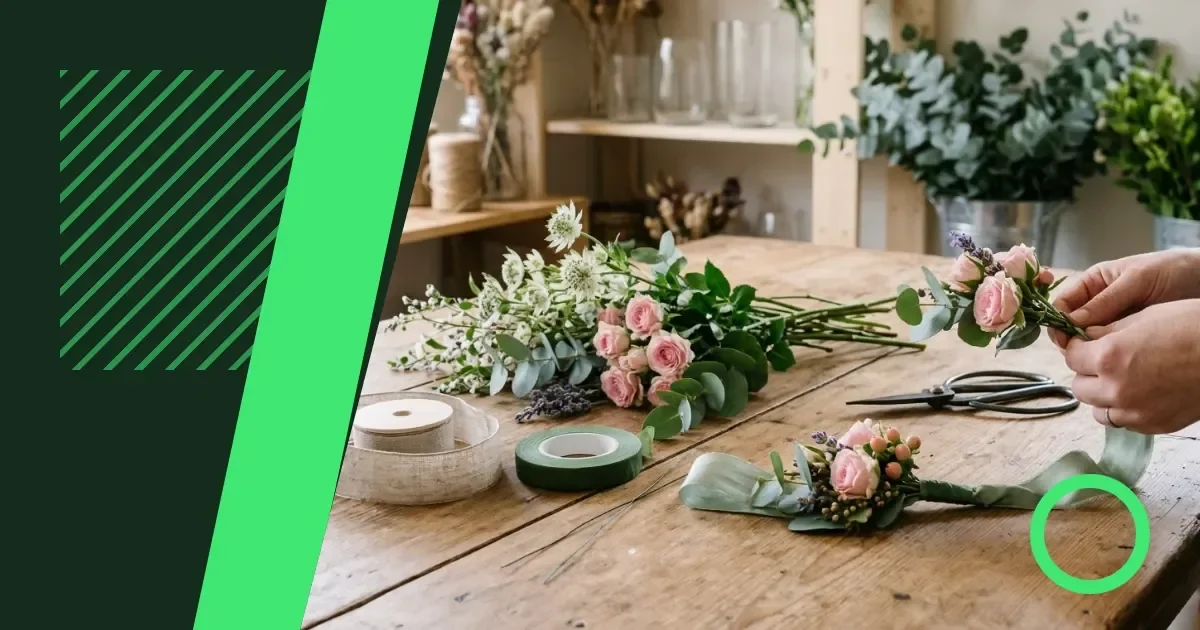
A wrist corsage is a small floral arrangement worn on the wrist, held in place by ribbon or elastic. You wire each bloom and leaf individually, tape them together into a compact cluster, then attach it to a band that sits comfortably against the skin. The first link to Harvest Moon Floral Art offers broader guidance on floristry techniques, but this page walks you through the specific sequence that produces a corsage secure enough to last an evening.
Flowers and Foliage That Work on the Wrist
Choose blooms with firm petals that recover from handling. Roses, spray roses, miniature carnations and orchids hold up well. Avoid anything with soft petals that bruise or heads so large they unbalance the design. A wrist corsage sits at an angle and moves with the wearer, so weight matters.
Add small leaves or fern fronds for texture. Pittosporum, ivy and ruscus are light and sturdy. Keep the total width no larger than the back of your hand; a corsage that extends past the wrist bone catches on sleeves and doors.
Conditioning Before You Start
Cut stems at an angle and let flowers drink for an hour in cool water. Petals should feel firm when you press them gently. Limp blooms collapse once wired, and there is no rescue after that point.
Tools and Materials You Will Need
Gather stub wire in two gauges – a heavier gauge for roses or orchids, a lighter gauge for smaller blooms and leaves. You will also need floral tape, ribbon or wrist elastic, scissors and wire cutters. If you are uncertain which gauge suits which task, florist wire gauges covers the differences in detail.
| Material | Purpose | Alternative |
|---|---|---|
| Stub wire | Supports bloom heads and replaces natural stems | None practical |
| Floral tape | Binds wire and seals cut ends | Parafilm in clinical settings |
| Satin ribbon | Wrist band, decorative finish | Elastic band for adjustable fit |
Wiring Individual Blooms
Remove the natural stem an inch below the flower head. Push a length of stub wire up through the calyx and into the centre of the bloom, then bend the wire down alongside the remaining stem. Wrap floral tape around the join, stretching it slightly as you spiral downward. The tape seals the cut end and holds the wire in place.
For roses, you can use the piercing method: push the wire horizontally through the thickest part of the calyx, then bring both ends down and twist them together beneath the head. This distributes weight more evenly than a single wire up the centre. If you are working with roses and need to strip thorns first, safe thorn removal explains the grip that protects your fingers.
Leaves and Filler
Stitch a fine wire through the central vein of each leaf, leaving equal lengths on either side, then twist the wire ends together below the leaf. Tape from the base of the leaf down the full length of the wire. This gives you a flexible stem you can bend to fit the corsage shape.
Assembling the Corsage
Hold the largest bloom in one hand, facing you. Add the next element – a smaller flower or a leaf – just below and slightly to one side. Bind the two wired stems together with floral tape, wrapping tightly. Continue adding blooms and foliage one at a time, taping after each addition, until you have a compact cluster no wider than your palm.
Angle smaller flowers outward so the corsage has depth rather than sitting flat. Trim the taped stem bundle to a length that sits comfortably against the wrist without digging in – usually the length of your thumb.
Checking Balance
Lay the corsage against the inside of your wrist. The heaviest bloom should sit just above the wrist bone, with lighter elements fanning out toward the hand. If it tips forward or back, adjust the angle of individual wires before you bind the ribbon.
Attaching the Wrist Band
Cut a length of ribbon long enough to wrap around the wrist twice with overlap for a bow. Lay the ribbon flat and place the taped stem bundle in the centre, flowers facing up. Fold one end of the ribbon over the stems and secure it with a few tight wraps of floral tape, then repeat on the other side. You now have ribbon tails extending from both sides of the corsage base.
To wear it, position the flowers on the inside of the wrist and tie the ribbon ends in a bow on the outside. A double knot before the bow stops it loosening during wear. For a more adjustable option, thread elastic through the taped base and knot the ends – this fits wrists of different sizes without retying.
Step-by-Step Construction Summary
- Condition flowers and cut each stem to an inch below the head.
- Wire each bloom by pushing stub wire through the calyx, then tape the join.
- Wire leaves by stitching through the vein and taping the twisted ends.
- Build the cluster by adding elements one at a time, binding with tape after each.
- Trim the stem bundle and attach ribbon or elastic to the taped base.
- Tie the corsage onto the wrist with the flowers facing inward.
Timing and Storage Before an Event
Make a wrist corsage the day of the event if you can. If you must work ahead, mist the finished piece lightly with water, slide it into a plastic bag without crushing the blooms, and refrigerate. Take it out half an hour before you need it so condensation evaporates. Corsages wilt faster than bouquets because wired stems cannot drink, so every hour counts.
Roses and carnations last longer than orchids once cut from their water source. If a bloom starts to soften, there is no fix – the design relies on flowers at their peak.
Common Mistakes and How They Show
A corsage that droops usually has wire that is too light for the flower head. Roses need a heavier gauge than freesia. If the ribbon slips, the tape wrap around the stem bundle was not tight enough; add another layer before attaching the band.
Petals that brown at the edges were handled too much during assembly or not conditioned long enough beforehand. Work quickly once the flowers are wired, and keep your hands cool and dry.
Wiring Too Tightly
If you push wire too far into a delicate bloom, the head splits. Stop when you feel resistance, then tape what you have. Better a slightly loose wire than a flower that falls apart when touched.
Alternative Fastenings for Different Occasions
For formal events, satin ribbon tied in a bow looks traditional. For proms or parties, try organza ribbon in a colour that picks up the dress. Pearl-headed pins can replace ribbon entirely: pin the corsage base to a wide bracelet or directly to a lace cuff. Elastic bands work well for dancing, since they stretch with movement and do not come undone.
Some florists hot-glue a magnetic clasp to the taped base, which holds the corsage against a metal bracelet. This suits modern designs but limits where the corsage can sit on the wrist.
Wearing and Handling on the Day
Position the corsage on the inside of the wrist, flowers facing the wearer. This shows the blooms to their best advantage and keeps them out of the way when shaking hands. Avoid pressing the wrist against tables or resting it on your lap – the petals compress and the wire bends.
If you need to remove the corsage temporarily, lay it on a cool surface away from direct heat. Radiators, car dashboards and sunny windowsills dry flowers out in minutes. After the event, untie the ribbon and drop the whole piece in a shallow dish of water; it will not revive fully, but you may get another hour or two of presentable wear.
Download PDF: Wrist Corsage Construction Checklist PDF, 28 KB
Frequently asked questions
What type of wire do you use for a wrist corsage?
Stub wire in two gauges – a heavier gauge for larger blooms such as roses or orchids, and a lighter gauge for small flowers and leaves. The wire must support the weight of each element without bending, but remain flexible enough to shape the overall design.
How do you attach a corsage to a wrist securely?
Wrap ribbon or elastic around the taped stem base and secure it with floral tape, leaving long tails on both sides. Tie the tails around the wrist in a double knot followed by a bow, or use elastic for an adjustable fit that stretches with movement.
Can you make a corsage the night before an event?
You can, but the flowers will not be at their best. Mist the finished corsage lightly, bag it without crushing the blooms, and refrigerate. Remove it half an hour before wear so condensation clears. Wired stems cannot drink, so every hour shortens the corsage's life.