Safe thorn removal and the grip that protects your hands
 Save
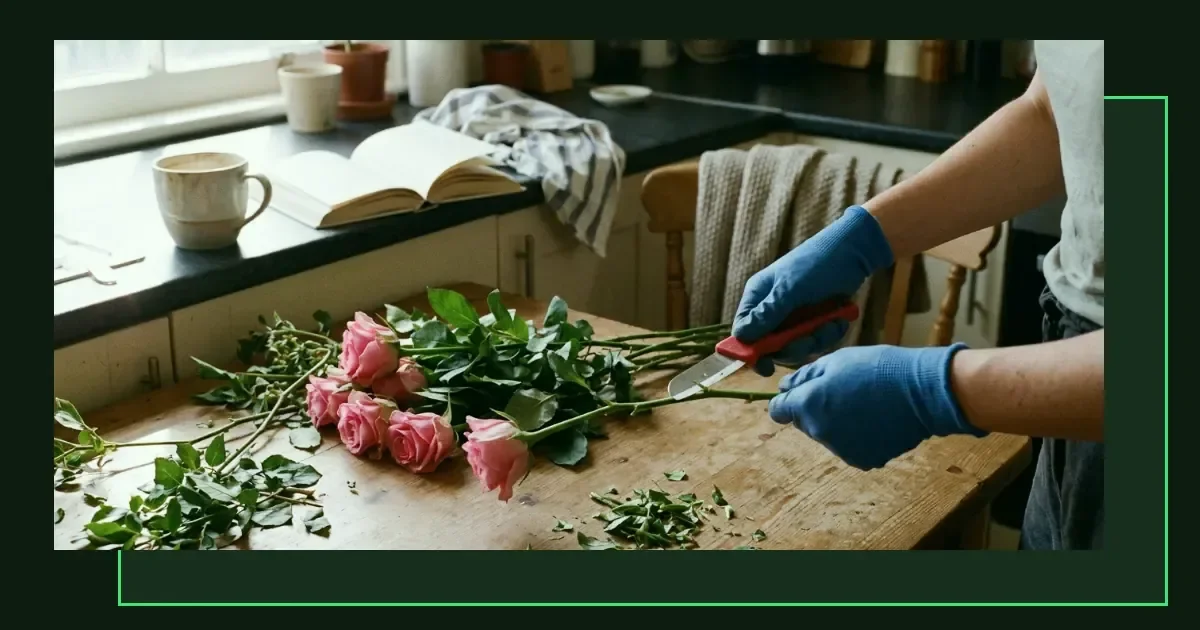
Removing rose thorns keeps your hands safe and makes stems easier to handle during arranging. The right tool and a firm downward motion strip thorns cleanly without tearing the stem or leaving you with scratches. Harvest Moon Floral Art walks you through the technique that works for delicate stems and thick garden roses alike, plus what to do when a thorn breaks the skin.
Why thorn removal matters
Thorns puncture skin, snag fabric and make it hard to hold a stem steady when you're wiring or taping. They also catch on other flowers in a hand-tied bouquet, damaging petals and leaves as you rotate the bunch. Stripped stems sit flush in your palm and slide smoothly through floral foam or a pin frog.
Leaving thorns on can seem faster, but you'll spend longer adjusting your grip and nursing small cuts. A clean stem is faster to work with and kinder to your hands.
Tools for stripping thorns
A purpose-made thorn stripper is a small plastic or metal tool with a V-shaped notch. You close the notch around the stem and pull downward; the notch catches the thorns and snaps them off at the base. It's quick and leaves the stem smooth.
If you don't have a stripper, use a blunt knife held perpendicular to the stem or the back edge of a pair of scissors. The blade should be dull enough that it won't slice into the stem tissue. Sharp secateurs are not the right tool here; they'll cut the stem surface and let bacteria in.
Florist gloves with rubberised palms give you a better grip on wet stems, but they won't stop a thorn going through if you squeeze hard. Leather gardening gloves offer more protection for stems with large, hooked thorns, though they reduce your dexterity when you're handling multiple stems.
The stripping technique
Hold the rose stem near the head with one hand, leaving the other hand free to work from just below the lowest leaf down to the cut end. Wrap your tool or blade around the stem at a slight angle and pull firmly downward in one smooth motion. The thorns should snap off cleanly.
Work in sections if the stem is long. Don't twist the tool as you pull; twisting can tear the outer layer of the stem and create an entry point for bacteria. If a thorn bends but doesn't break, reposition your tool slightly higher on the thorn and pull again.
For very fresh roses with soft green stems, use less pressure. For woody stems from the garden, you may need to make several passes, especially where thorns cluster near nodes.
Stripped length
Remove thorns from the lower half to two-thirds of the stem, depending on your vase depth or the point where the stem will sit in foam. Leave the upper portion untouched if the thorns aren't in your way; stripping the entire stem takes time you don't need to spend and exposes more surface area to damage.
For a hand-tied bouquet, strip the binding point and a hand's width either side of it. That gives you a smooth section to hold and tie without snagging the ribbon or your skin. If you're making a buttonhole, strip the entire stem, because even a single thorn can catch on fabric or poke through to the wearer's chest.
Common mistakes and how to avoid them
Pulling upward instead of downward lifts the thorn away from the stem and often tears a strip of bark with it. That wound interrupts water uptake and shortens vase life. Always pull toward the cut end.
Using your bare thumb to scrape thorns off works for a single stem, but your thumb will be raw after a dozen roses. The repetitive pressure also pushes thorns into your skin rather than breaking them cleanly, and small fragments can stay embedded.
Stripping wet stems is harder because your tool slides rather than grips. Pat the stem dry with a cloth before you start, or wait until after conditioning if the roses have been soaking.
When thorns won't budge
Old, woody stems sometimes have thorns that feel welded on. If your usual tool isn't working, try holding the stem over a towel and using small side-cutters to snip each thorn off at the base. It's slower, but it avoids gouging the stem. The towel catches the thorn fragments so they don't end up on your work surface or floor.
Dealing with thorn injuries
Rose thorns carry soil bacteria and plant matter, so even a shallow puncture can become infected. Wash the wound immediately under running water and apply pressure if it's bleeding. Check for thorn fragments under the skin; they look like dark splinters and can cause swelling if left in.
A thorn embedded in your finger often works its way out on its own over a day or two, but if the area becomes red, warm or painful, remove it with clean tweezers. Sterilise the tweezers with rubbing alcohol first, and wash the wound again afterward.
Keep a small first-aid kit in your workspace with plasters, antiseptic wipes and tweezers. If you're stripping a large batch of roses, take breaks to check your hands for small cuts you didn't feel at the time.
Thorn removal across rose varieties
Florist roses bred for the cut-flower trade have fewer thorns than garden varieties, and the thorns are smaller and easier to remove. Spray roses and sweetheart roses have fine thorns that snap off with very light pressure, so a thorn stripper set to its gentlest notch is enough.
Garden roses such as David Austin varieties have thicker stems and larger, more curved thorns. These need a firmer grip and sometimes a second pass to catch thorns you missed the first time. Old-fashioned rambling roses can have thorns along the entire length of the cane, including right up to the flower head; be prepared for a longer stripping job.
| Rose type | Thorn character | Best tool |
|---|---|---|
| Florist roses | Small, sparse | Stripper, light pressure |
| Garden roses | Large, curved | Stripper or blunt knife, firm pull |
| Spray roses | Fine, brittle | Stripper, gentle notch |
| Rambling varieties | Dense, hooked | Side-cutters for stubborn ones |
Step-by-step thorn stripping
- Lay out your roses on a clean work surface and check each stem for thorns, noting where the densest clusters sit.
- Hold the stem firmly near the flower head with your non-dominant hand, keeping your fingers clear of the thorns below.
- Position your thorn stripper or blunt blade just below the lowest leaves, angled slightly toward the cut end.
- Close the tool around the stem and pull downward in one smooth motion, applying even pressure until you reach the end of the stem.
- Inspect the stripped section and make a second pass if any thorns remain, working from top to bottom again.
- Place the stripped stem in water immediately to keep it hydrated, and move on to the next rose.
Conditioning after stripping
Stripped stems need a fresh cut and a deep drink before you arrange them. Use sharp secateurs to remove about two centimetres from the bottom at a forty-five-degree angle, cutting through cleanly without crushing the tissue. The angled cut increases the surface area for water uptake.
Place the stems in lukewarm water up to their necks and leave them in a cool, dim spot for at least two hours. This lets the roses rehydrate fully and recover from the handling. If you've stripped a large batch, change the water halfway through conditioning to keep it clean.
Stripping thorns does create small wounds on the stem surface, so the water you condition them in will carry more bacteria than usual. Adding a drop of bleach or a flower-food sachet helps, but the most important step is simply keeping the water fresh. For more on helping cut flowers recover, see our guide on bringing supermarket flowers back to life.
When to leave thorns on
If you're arranging roses in a tall vase and the thorns sit well above the waterline, you can leave the upper portion untouched. This saves time and reduces the number of wounds on the stem. The same applies if you're creating a wild, natural design where a few visible thorns add to the organic feel.
For installations or large-scale work where the roses will be seen from a distance, thorns on the upper stems rarely matter. Strip only the sections you'll be handling or taping, and leave the rest as they are. Focus your effort where it protects your hands and makes the work easier, not on achieving a perfectly smooth stem for its own sake.
Storing stripped stems
Once thorns are removed, roses can be stored upright in buckets of water for several days if kept cool. The lack of thorns makes them easier to pack tightly without damaging neighbouring blooms. If you're transporting them, wrap the stems in damp paper and slide them into a plastic sleeve to prevent the stripped sections from drying out.
Stripped stems are more vulnerable to bacterial growth because the thorn removal exposes fresh tissue. Change the water daily and trim the ends every other day to keep the stems drawing water efficiently. If you notice slime forming on the cut ends, rinse them under a tap and recut before returning them to fresh water. The same care applies when you're storing cut flowers overnight in preparation for an early arrangement.
#Roses #Stem care #Conditioning #Secateurs
Download PDF: Rose Thorn Removal Checklist PDF, 28 KB
Frequently asked questions
What is the easiest way to remove thorns from roses?
Use a thorn stripper or the back of a blunt knife, hold the stem near the flower head, and pull the tool downward in one smooth motion. The thorns snap off cleanly without tearing the stem.
Do you need to remove all the thorns from a rose stem?
Strip the lower half to two-thirds of the stem, or just the section you'll be handling and the part that sits in water or foam. Leaving thorns on the upper stem saves time and reduces damage.
Can you use your hands to strip rose thorns?
You can scrape them off with your thumb, but it's slow, painful after a few stems, and risks embedding thorn fragments in your skin. A thorn stripper or blunt blade is safer and faster.