Change Water Without Unsettling Your Arrangement
 Save
The simplest way to keep water fresh is to lift your arrangement carefully out of the vase, rinse it thoroughly, and set it back. The flowers themselves stay together if the arrangement is well-structured, and most blooms are more resilient than people expect. On Harvest Moon Floral Art, you'll find techniques for every arrangement type, plus the tools that make water changes easier and safer. By the end, you'll have a method that works for your space.
Why people hesitate to refresh the water
Many people avoid changing vase water because they fear the arrangement will fall apart or the stems will damage. This caution comes from not knowing how firmly flowers actually bind together when they're arranged. A hand-tied bouquet, a foam block arrangement, or a tight vase all hold their shape once placed, even with careful handling.
Another common worry is that removing the arrangement will break the stems themselves. In reality, dry flower stems are surprisingly robust; they're more at risk from sitting in stale or cloudy water for days. Clean water is one of the single biggest factors in how long cut flowers last, so the benefit of changing it far outweighs the small risk of handling.
How often water needs changing
Fresh water extends vase life significantly. The moment you place an arrangement in water, bacteria begin to multiply and stems gradually take up less water as the vase becomes cloudy or slimy. Changing the water every two or three days keeps flowers upright and crisp for longer than waiting a week.
You can tell water has deteriorated when it becomes cloudy, develops a faint smell, or turns slightly brown. Some flowers – especially roses and chrysanthemums – tolerate stale water longer than soft-stemmed varieties like sweet peas or delphiniums. Rather than follow a strict schedule, watch for visual signs and change water when it loses its clarity.
The lift-and-rinse method
This is the gentlest, most reliable way to refresh an arrangement. It works for hand-tied bouquets, compact arrangements in vases, and even some foam-block designs.
- Gather the stems at the base of the arrangement and lift it as a unit out of the vase, supporting the flower heads loosely with your other hand.
- Empty the old water down the sink and rinse the inside of the vase under running water, rubbing away any slime or discoloration with your fingers.
- Fill the vase with fresh, tepid water – cold water can shock the flowers.
- Lower the arrangement back into the vase, ensuring the stems sit fully submerged.
- Remove any leaves that now sit below the waterline, as they decay and accelerate bacterial growth.
This method works whether your arrangement is a shop-bought bouquet or one you've created yourself. The entire process takes a few minutes and gives flowers a complete refresh.
Different arrangements, different approaches
Not all arrangements sit in water the same way, so your refresh method can adapt to suit.
| Arrangement type | How it sits in water | Refresh method |
|---|---|---|
| Hand-tied bouquet | Stems bunch together at the base | Lift and rinse; clip dry bottom before replacing |
| Vase arrangement | Individual stems spread across the vase | Lift and rinse, or pour out and refill if stems are very short |
| Floral foam arrangement | Stems sit in wet foam, not water | Top up with water; do not lift |
| Delicate or tall stems | Prone to bending or tangling | Partial water refresh; pour gently rather than lift |
If you have a foam-block arrangement, lifting is not necessary. Simply pour away any standing water that has pooled on top of the foam and add fresh water – the foam itself holds moisture. For very tall, delicate arrangements in narrow vases, a gentle pour-and-refill is sometimes safer than lifting.
Tools and techniques that help
A few simple additions make water changes easier and less stressful. A flower support – like a pin frog or a length of chicken wire shaped inside the vase – keeps stems from shifting when you lift. This is particularly useful if you're new to handling arrangements or if your flowers are loosely arranged.
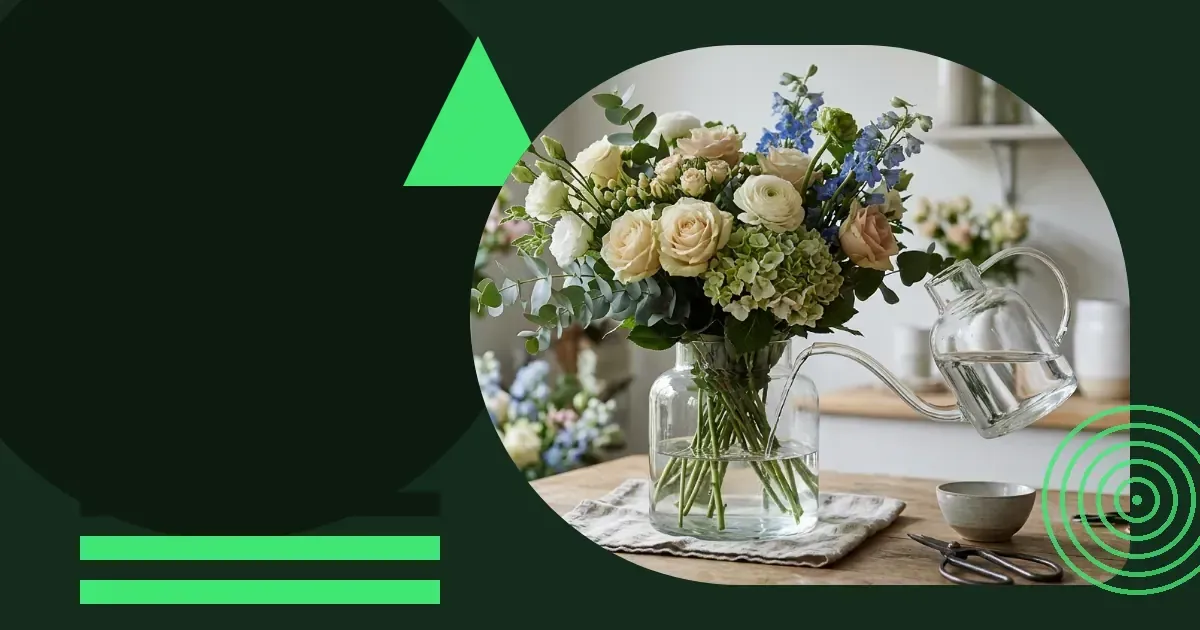
A jug with a spout lets you pour fresh water without tilting the entire arrangement. This slow-pour method is gentler on very delicate flowers and gives you more control if stems are tightly packed. For foam arrangements, a spray bottle or misting bottle lets you add water gradually without disturbing the placement.
Protecting the most delicate flowers
Some flowers bend, bruise or drop petals more easily than others. Peonies, ranunculus, dahlias and sweet peas all benefit from extra care during water changes. If you're uncertain, pour the old water away while the arrangement sits in the vase, then add fresh water slowly using a jug – you avoid lifting altogether. This method works well for any arrangement you've invested time in creating.
After changing water, trim a thin slice from the base of the stems if they feel slimy or discoloured at the cut. This removes any damaged tissue and helps the flowers take up water more efficiently. Use a sharp knife or bypass secateurs – blunt tools crush the vascular tissue instead of slicing cleanly.
Keep reading on related skills
Water management is one part of keeping flowers vibrant. Learn more about how to revive flowers that have started to wilt, which often works best alongside fresh water and a stem trim. If you're arranging flowers yourself, understanding how to use flower frogs and stem supports makes water changes far simpler. For those learning to care for specific flowers, explore how to manage tulips that bend in the vase – a common challenge when water quality drops.
Download PDF: Weekly Water Refresh Checklist PDF, 29 KB
Further reading
Frequently asked questions
How do you change water in a vase without disturbing the flowers?
Lift the entire arrangement out of the vase, supporting the stems at the base and the flower heads gently with your other hand. Empty and rinse the vase, fill with fresh water, and lower the arrangement back in. Well-arranged flowers stay together throughout the process.
What should you do if the vase water becomes cloudy?
Cloudy water signals bacteria growth and reduced water uptake by the stems. Change the water immediately, rinse the vase thoroughly to remove the biofilm, and trim the bottom of the stems with a sharp knife before returning the arrangement to clean water.
Can you top up a vase instead of changing all the water?
Topping up adds fresh water but leaves old water and bacteria behind, so it extends vase life only slightly. A complete water change with a rinse of the vase is far more effective. For foam arrangements, however, topping up is the correct method – you do not change the water.