Snips, Support and Storage: The 6 Essential Floristry Tools You'll Use on Every Project
 Save
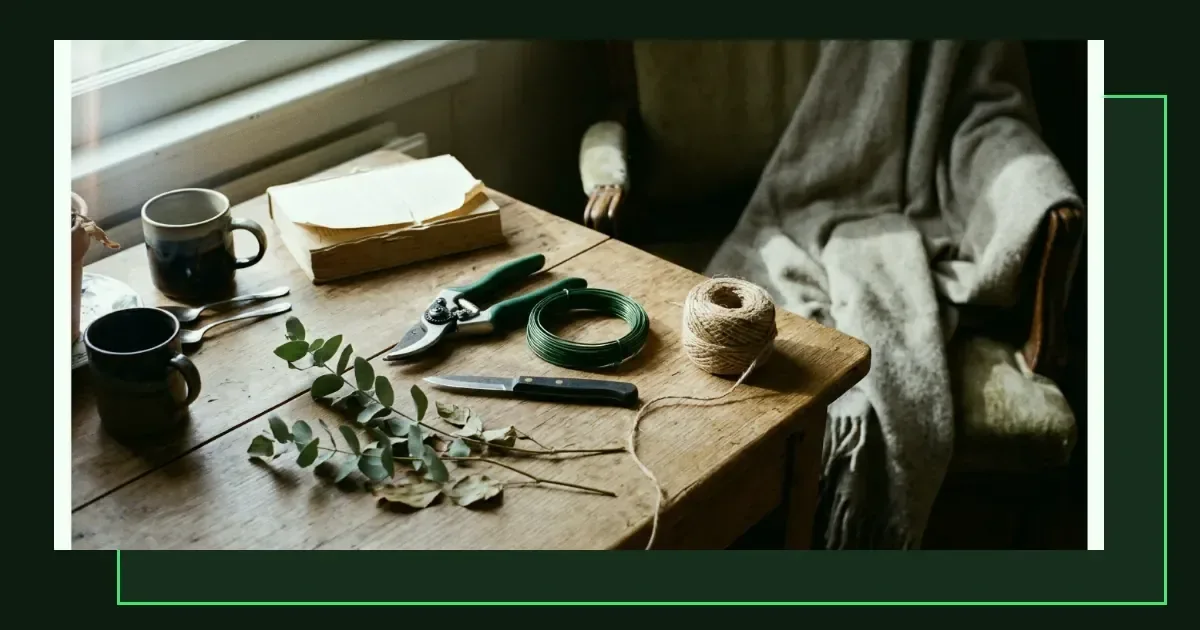
Anyone starting out in floristry or stepping up their home arranging faces the same question: which tools actually matter? You need sharp secateurs, florist's wire, florist's tape, a clean bucket, a pin frog and a roll of chicken wire. Everything else is a refinement or a shortcut, but these six appear in nearly every arrangement you make. Harvest Moon Floral Art explains what each one does, why it earns its place in the kit and where beginners trip up when they skip them.
Secateurs: where every stem begins
A pair of bypass secateurs makes the single cleanest cut a stem can get. The blades cross like scissors rather than crushing, so water can travel up the stem without fighting through bruised tissue. Garden shears work for soft herbs, but roses, woody shrubs and anything thicker than your finger need the force secateurs bring. Sharp blades also mean you control the angle: a slant opens more surface for water uptake than a blunt chop.
Most florists keep two pairs: one for fresh stems, one for ribbon and wire. Sap and mineral deposits dull the edge faster than you expect, so a quick wipe after each session and a proper clean once a week keeps them closing smoothly. If you find yourself pressing hard to close the handles, the blades need sharpening or replacing.
Florist's wire and tape
Wire extends what a stem can do. Wrap it around a weak or hollow stem and you can position a bloom exactly where the design needs it, or reinforce a snapdragon that wants to droop. Gauge matters: thicker wire for heavier stems, finer for delicate work like buttonholes. Green-coated wire disappears into foliage; silver suits modern, structural designs where the mechanics show on purpose.
Florist's tape—often called stem tape—seals the wire to the stem and hides the join. It only sticks to itself, so you stretch it slightly as you spiral down, covering the wire in a single smooth pass. The tape also prevents moisture loss where you've pierced the stem, which matters when you're working on a hand-tied bouquet that sits out of water for a while. The combination of wire and tape turns a fragile stem into something you can bend, loop or arch without snapping it.
When to skip the wire
Not every arrangement needs it. Loose, natural designs and anything going straight into water often rely on the stems' own strength. Wire shows its worth in structured work—wedding bouquets, wired wreaths, corsages—and in situations where gravity or transport would otherwise flatten the flowers. If you're learning to arrange, try a few hand-tied posies without wire first: you'll know when a stem would benefit from support because it will refuse to stay where you place it.
A dedicated bucket or two
Stems drink best from clean water in a tall container. A florist's bucket is deeper than a household jug and wide enough that stems don't crush each other, so each one gets the few hours of deep conditioning it needs before you start arranging. Plastic works as well as metal; what matters is that you scrub it out between batches to stop bacteria building up.
Keep one bucket for conditioning freshly cut stems and a second for soaking foliage. Leaves shed more debris than petals, so separating them means your flower water stays clearer. If space or budget allows only one bucket, rinse it thoroughly between uses. The difference in vase life between flowers conditioned in clean water and those left in a dirty container shows up within a day.
Pin frogs and chicken wire: holding stems where you want them
A pin frog—a heavy metal disc studded with upright pins—sits at the bottom of a low bowl and grips each stem where you push it down. The weight stops the frog sliding around, and the pins let you angle stems in any direction without them collapsing into the centre. Pin frogs suit shallow arrangements where you want control over every placement: ikebana-style designs, low centrepieces, anything sculptural.
Chicken wire is the older, looser cousin. Scrunch a piece into a ball, tuck it into a vase and push stems through the gaps. It holds them upright without the precision of a pin frog, so it works well in taller, more relaxed arrangements where you're building volume rather than placing each stem individually. Wire rusts if you leave it wet, so pull it out and dry it after each use or replace it when it starts to discolour the water.
Foam: a tool with conditions
Floral foam has been the quick solution for decades, but more florists are stepping back from it. It's single-use plastic, it crumbles into waterways and it dries out faster than beginners expect. If you do use it, soak it properly—let it sink under its own weight rather than pushing it down—and know that once it dries, it won't rehydrate reliably. Pin frogs and wire take longer to learn, but they last for years and let you rearrange as you go. What floral foam is and why florists are rethinking it covers the environmental side and the practical alternatives in more detail.
Storage: keeping tools clean and ready
A toolbox or a canvas roll keeps your kit together and stops blades knocking into each other. Secateurs, wire cutters and any knife you use should be wiped dry after each session; a thin film of oil on the pivot every few weeks prevents rust. Wire and tape stay tidier on a wall-mounted holder or in a drawer with dividers, so you're not untangling a ball of green wire when you need a single length.
If you're working from home rather than a dedicated studio, a plastic crate with a handle does the job. Pack your tools, a spool each of wire and tape, a small pair of scissors for ribbon and a cloth for spills. Everything you need for a simple arrangement fits in one container, and when you're done, the whole kit goes back on a shelf or into a cupboard. The less time you spend hunting for the right tool, the more you spend on the flowers themselves.
What you can add later
Once the core six are in place, you'll notice gaps as your work expands. A floral knife gives you a cleaner cut on thick stems than secateurs can manage, and a ribbon shredder saves time if you're finishing a dozen bouquets. A spray bottle for misting, a paddle wire dispenser, a glue gun for dried work—all useful, none essential at the start.
The tools worth adding next are the ones you find yourself improvising. If you're wrapping stems with ribbon and it keeps slipping, you'll know you need proper corsage pins. If you're making a large installation and chicken wire isn't giving you enough structure, a grid or a cage frame might be the answer. The core kit gets you through most of what home floristry and small-scale professional work asks for; everything else builds outwards from there as your projects demand it.
Buying new or secondhand
Secateurs and pin frogs last long enough that secondhand versions from a car boot sale or an online marketplace often work as well as new, provided the blades still close cleanly and the pins haven't bent. Wire and tape are inexpensive enough to buy fresh; old tape loses its stretch and old wire kinks in ways you can't straighten out. Buckets can come from anywhere—catering suppliers, garden centres, even a cleaned-out paint tin if it's tall and stable.
Avoid the temptation to pick up a prepackaged floristry kit if you're just starting. They usually include items you won't touch for months—foam you're trying to avoid, ribbon in colours you don't use, novelty tools that solve problems you don't have yet—and skimp on the quality of the secateurs and wire. Build your kit one piece at a time, buying the best version of each tool you can afford when you need it. A single excellent pair of secateurs beats a full box of tools that bend or dull by the second arrangement.
Download PDF: Essential Floristry Tools Checklist PDF, 30 KB
Further reading
Frequently asked questions
What is the most important tool for floristry?
Sharp bypass secateurs. They make the cleanest cut on every stem, which lets water travel up without fighting through crushed tissue. A good pair lasts years and appears in every single arrangement you make.
Do I need floral foam to start arranging flowers?
No. Pin frogs and chicken wire hold stems just as securely, last for years and let you rearrange as you go. Foam is single-use, dries out quickly and has environmental drawbacks that more florists are moving away from.
Can I use garden scissors instead of florist's secateurs?
Garden scissors work for soft stems like herbs, but anything woody or thicker than your finger needs the force and clean cut that bypass secateurs provide. Crushing the stem restricts water uptake and shortens vase life.