Scissors, Secateurs and Stem Cutters: Five Tools That Shape How Flowers Last
 Save
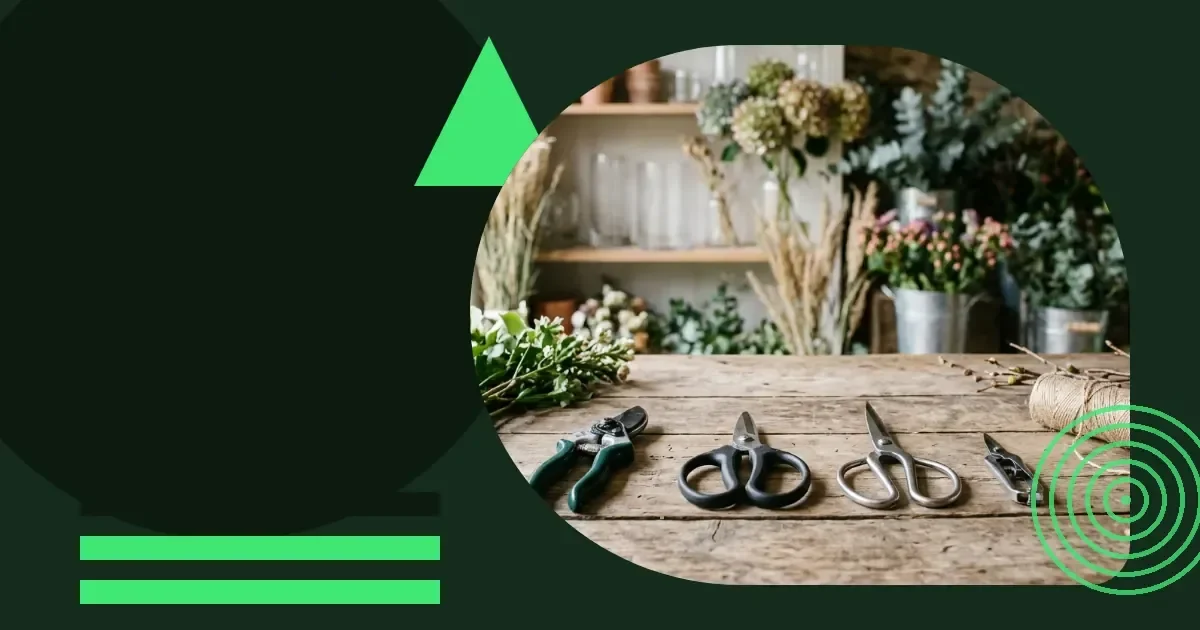
The tool you use to cut a stem determines whether the vascular tissue stays open or crushes shut. A clean cut lets water reach the bloom; a pinched stem wilts within hours. Harvest Moon Floral Art walks through the cutting tools that suit different stem types, the blade features that matter and when each tool earns its place in your kit.
Bypass Secateurs for Woody Stems
Bypass secateurs work like scissors: two sharp blades pass each other to slice through the stem without crushing it. The clean cut preserves the channels that carry water to the flower head.
Woody stems — roses, lilac, viburnum — need the force bypass blades give. The crossing action cuts fibrous tissue in one motion, leaving the end open to take up water during conditioning. Anvil secateurs, which press the stem against a flat plate, bruise soft tissue and close the vascular bundles on many flower stems.
Spring-loaded handles reduce the effort needed to cut through thick stems repeatedly. A safety catch stops the blades opening in a bag or apron pocket.
Florist Scissors for Soft Stems and Fine Work
Florist scissors have short, pointed blades and long handles that give you control over delicate cuts. The blade length suits trimming individual stems to length, snipping foliage and cutting ribbon or tape.
Soft-stemmed flowers — tulips, anemones, ranunculus — bruise easily under the pressure of secateurs. Scissors slice cleanly through the stem without compressing it. The fine tips let you work close to a bloom or into tight spaces between stems in an arrangement.
Serrated edges grip slippery stems but leave a rougher cut than a smooth blade. A smooth, sharp edge suits most floristry tasks; serrations help only when cutting wet or coated stems that slide against the blade.
Stem Strippers and Thorn Removers
A stem stripper has a notched blade or gripping surface that pulls thorns and lower leaves off a stem in one downward motion. Stripping by hand tears the stem's outer layer, creating entry points for bacteria that shorten vase life.
Rose stems carry thorns that snag fabric and scratch hands during arranging. Running the stem through a stripper removes them without damaging the bark underneath. Lower foliage that would sit below the waterline in a vase is stripped at the same time, reducing bacterial growth in the water.
Some designs combine a stripper with a small blade for cutting wire or trimming stub ends. The notch size must match the stem diameter: too wide and the tool slides over thorns without catching them; too narrow and it gouges the stem.
Shears for Volume Cutting and Field Work
Long-handled shears cut multiple stems at once or reach into a bed of flowers without bending. The extended handles give leverage for cutting through bunches of foliage or conditioning large quantities of stems to the same length.
Garden centres and cutting gardens use shears to harvest armfuls of flowers quickly. The blade length makes them less practical for precision work on a workbench, where shorter tools give better control.
Shears with one serrated blade hold slippery stems in place while the smooth blade cuts. The serrations leave small grooves in the stem that some arrangers believe help with water uptake, though the effect is minor compared to the angle and freshness of the cut.
Craft Knives for Angled Cuts and Stem Preparation
A sharp craft knife lets you cut stems at a steep angle, increasing the surface area exposed to water. The long, slanted cut is standard practice for conditioning stems before arranging.
Knives give you control over the cut angle that scissors and secateurs cannot match. A shallow cut suits stems going into floral foam; a steep angle suits stems standing in water. The blade cuts cleanly through hollow stems without crushing them, which matters for flowers like daffodils and amaryllis that release sap when cut.
Retractable blades are safer to store than fixed knives. A blunt blade tears stems rather than slicing them, so replacing or sharpening the blade keeps the tool useful.
Matching Tool to Stem Type
| Stem type | Recommended tool | Why it matters |
|---|---|---|
| Woody (roses, lilac) | Bypass secateurs | Force needed to cut without crushing |
| Soft (tulips, anemones) | Florist scissors | Gentle cut prevents bruising |
| Hollow (daffodils, amaryllis) | Craft knife | Clean slice avoids collapsing walls |
| Thorny (roses, thistles) | Stem stripper | Removes thorns without tearing bark |
Blade Sharpness and Maintenance
A dull blade crushes stem tissue instead of slicing it. The damaged cells at the cut end clog with air and debris, blocking water uptake. Flowers conditioned with blunt tools wilt faster than those cut with sharp blades.
Wipe blades clean after each session to remove sap and plant material that dries into a sticky residue. Dried sap binds the blades and transfers bacteria from one stem to the next. A cloth dampened with warm water lifts fresh sap; methylated spirits dissolves dried resin.
Secateurs and scissors can be sharpened with a fine whetstone or taken to a professional sharpener. Craft knife blades are replaced rather than sharpened. Spring mechanisms on secateurs weaken over time; oil the pivot point to keep them moving smoothly.
When One Tool Is Enough and When You Need More
A single pair of florist scissors handles most home arranging: trimming stems to length, cutting ribbon and removing lower leaves. Bypass secateurs become necessary when you work regularly with woody-stemmed flowers or garden-grown material with thick stems.
Professional florists keep several tools within reach because switching between tasks is faster than adjusting technique. A stem stripper speeds up rose preparation for wedding work; shears make sense when conditioning large orders. Home arrangers can cover most tasks with scissors and secateurs, adding other tools as the work expands.
The tool that suits the task gives you a clean cut without effort. Forcing scissors through a woody stem damages both the tool and the stem; using secateurs on a soft tulip crushes it. Matching tool to stem type protects the flower and makes the work easier.
Practical Steps for Clean Cuts
- Cut stems at an angle under running water or in a basin to prevent air entering the vascular tissue.
- Remove lower leaves and thorns with a stripper before placing stems in water.
- Re-cut stems every few days to expose fresh tissue and maintain water uptake.
- Wipe blades clean between different flower types to avoid transferring sap or bacteria.
- Store tools dry to prevent rust on metal components and degradation of plastic handles.
Choosing Tools That Last
Steel blades outlast coated or plated ones. The coating chips with use, leaving rough edges that snag stems. Stainless steel resists rust and keeps an edge longer than softer metals.
Handle comfort matters when you are conditioning large quantities. Cushioned grips reduce hand fatigue; rubberised coatings give better grip when wet. Lightweight tools suit occasional use; heavier, forged designs absorb the effort of repeated cutting.
Replaceable blades on craft knives and some scissors extend the tool's working life. Fixed-blade designs are discarded when they dull. Secateurs with replaceable springs and pivot bolts can be repaired rather than replaced when components wear out.
#Secateurs #Stem care #Conditioning
Download PDF: Cutting Tool Care and Use Checklist PDF, 28 KB
Frequently asked questions
What is the difference between bypass and anvil secateurs for flowers?
Bypass secateurs have two sharp blades that pass each other to slice cleanly through the stem, preserving the vascular tissue. Anvil secateurs press the stem against a flat surface, which crushes soft tissue and reduces water uptake in most flower stems.
Do florist scissors need to be sharpened?
Yes, florist scissors perform best when sharp. A dull blade crushes stems instead of cutting them cleanly, which shortens vase life. Wipe the blades clean after use and sharpen them with a fine whetstone or take them to a professional sharpener.
Can you use kitchen scissors to cut flower stems?
Kitchen scissors can cut soft stems in an emergency, but they lack the fine tips and short blades that give control over delicate floristry work. Florist scissors are designed for precision and repeated use on fresh plant material.