The Self-Sealing Properties and Five Essential Uses of Floral Tape
 Save
Floral tape is a stretchy, waxy binding material that seals to itself when pulled, creating a smooth finish over wired stems, joinings and the mechanics of buttonholes and corsages. Unlike adhesive tape, it only sticks to itself, leaving no residue on flowers or hands. Harvest Moon Floral Art walks you through what it does, when you reach for it and the technique that makes it work.
What floral tape is made from
Floral tape is a thin paper or crepe ribbon coated with a blend of wax and gum. The coating stays dry to the touch until you stretch the tape, which activates the wax and makes the layers bond together. It comes in narrow rolls, wrapped around a small spool, and is sold by colour: moss green and brown for natural stems, white for bridal work, and occasionally other shades for themed designs.
You may see it called stem tape or gutta tape. The mechanism is the same across brands: pull to activate, wrap to seal.
The five tasks floral tape handles
Floral tape shows up in situations where stems need support, joinings need covering, or mechanics need hiding. Here are the five places you reach for it.
Covering wired stems
When you wire a flower head to lengthen a short stem or support a heavy bloom, the wire shows. Tape wraps around the wire and any remaining natural stem, creating a smooth, cohesive surface that looks tidy and feels comfortable to handle. This matters especially in buttonholes and corsages, where the back of the flower sits against fabric or skin.
Binding multiple stems into one
Small wired elements – single petals, clusters of berries, sprigs of foliage – often need joining into one composite stem before you add them to a design. Tape holds them together without bulk, and you can keep adding components as you spiral down, building a stem that behaves as one piece.
Sealing cut stem ends
When you shorten a stem, the cut end exposes fresh tissue that dries out quickly. A single wrap of tape over the cut slows moisture loss and keeps the stem end clean, which is useful in designs where stems are handled repeatedly or left out of water during construction.
Securing ribbon and wire joinings
The point where ribbon meets wire, or where two wired stems cross, can shift under the weight of the bloom or during transport. A few tight turns of tape lock the join in place without adding visible hardware. It disappears into the structure.
Reinforcing hollow or fragile stems
Stems such as hyacinth or certain tulip varieties are hollow and prone to snapping under their own weight. Taping along the length, sometimes over a fine internal wire, gives the stem enough rigidity to hold its position in an arrangement without looking stiff.
How to apply floral tape properly
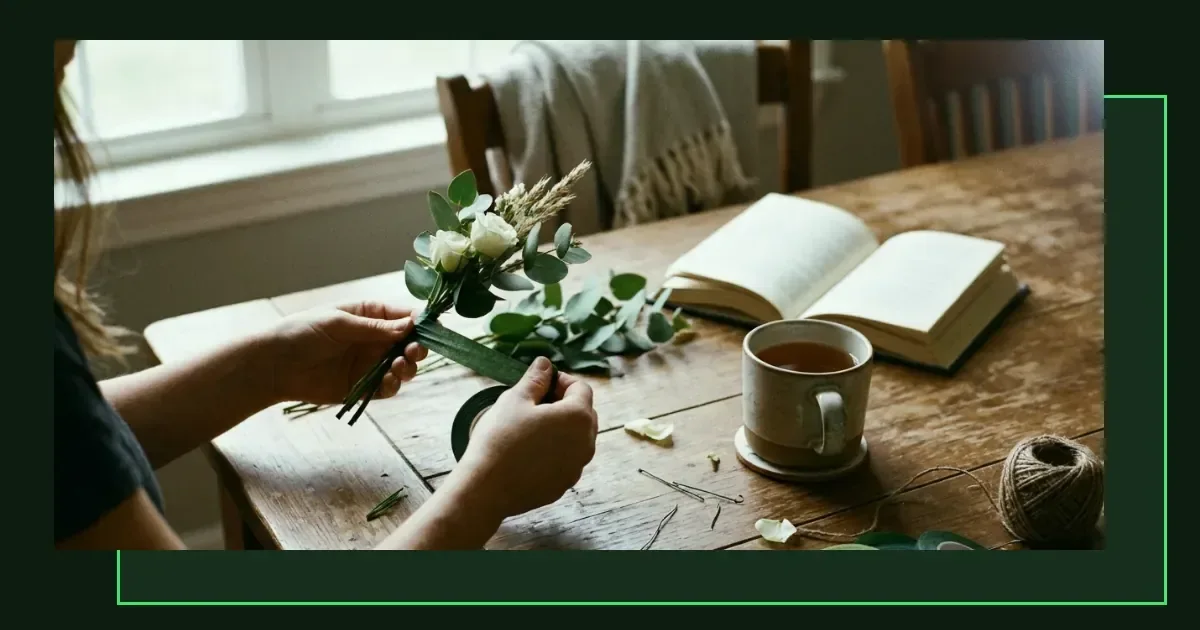
The tape works only when stretched. Hold the end against the top of the stem or wire with your thumb, pull the tape taut at a slight downward angle, and turn the stem with your other hand. The tape wraps itself as the stem rotates. Keep tension steady: too loose and it peels away; too tight and it tears.
- Anchor the tape end at the top of the stem or join, holding it in place with your thumb and forefinger.
- Stretch the tape until you feel resistance – the waxy coating activates at this point.
- Rotate the stem towards you while guiding the tape downwards at a shallow spiral, overlapping each turn by half the tape width.
- Press the final turn firmly against itself to seal, then tear or cut the tape.
Once you have the rhythm, the tape flows on quickly. The stretch-and-turn motion becomes automatic.
Colours and when each one matters
Green tape vanishes against foliage and fresh stems. Brown matches woody stems, twigs and dried materials. White sits cleanly in bridal work, especially over silver or white-painted wire. Choosing the right colour keeps the mechanics quiet, which matters in designs where the back or underside is visible.
| Colour | Best used for | When it shows less |
|---|---|---|
| Moss green | Fresh stems, foliage | Hand-tied bouquets, centrepieces |
| Brown | Woody stems, twigs, dried work | Rustic designs, autumn arrangements |
| White | Bridal work, pale flowers | Buttonholes, corsages, delicate wiring |
Width and quality differences
Floral tape comes in standard width, roughly the width of your thumbnail, and occasionally in narrower rolls for fine detail work. Cheap tape often lacks enough wax coating, so it stretches poorly and refuses to seal. Better-quality tape pulls smoothly without tearing and bonds on the first pass. You feel the difference immediately: reliable tape wraps in one continuous motion, while poor tape stops and starts, forcing you to patch gaps.
Storage and shelf life
The wax coating dries out over time, especially in warm or fluctuating conditions. Store tape in a cool, dry place, away from direct heat. If a roll has been sitting unused and feels brittle or refuses to seal when stretched, replace it. Old tape wastes more time than it saves.
When you do not need floral tape
Stems going straight into water, with no wiring or mechanical joinings, do not require tape. Hand-tied bouquets bound with twine or raffia at the binding point stay secure without it. Large arrangements built in foam or on chicken wire, where each stem is inserted individually, rarely call for tape unless you are pre-wiring certain blooms for support.
Tape solves problems of mechanics and structure. If the design has neither, you probably will not reach for it.
Practical notes for beginners
Expect the first few attempts to feel clumsy. The tape tangles, tears or refuses to stick because the stretch was too gentle. Keep practising the pull: firm enough to activate the coating, smooth enough to avoid ripping. Once your hands learn the tension, the process becomes quick and unthinking.
Buy tape in the colour you will use most. A single roll lasts through many projects, so starting with one shade keeps things simple while you build confidence. Green suits general work; white fits weddings and formal designs.
Combining floral tape with wire
Wire and tape work as a pair in most structural floristry. Wire provides the skeleton, tape provides the skin. The wire supports weight and holds shape; the tape hides the wire and protects hands and fabric from sharp ends. Neither does the other's job, and trying to use tape as structural support or wire as a finish never works as well as using both.
Where to find it and what to expect
Floral tape is sold by floristry suppliers, craft shops and online. A single roll costs less than a bunch of supermarket flowers and lasts for months of regular use. Buy from a supplier whose stock turns over regularly – fresh tape with intact wax coating makes the learning curve shorter.
Download PDF: Floral Tape Application Checklist PDF, 28 KB
Frequently asked questions
What is stem tape used for in floristry?
Stem tape, also called floral tape, covers wired stems, binds multiple elements into one, seals cut ends and secures joinings in buttonholes, corsages and structural designs. It only sticks to itself when stretched.
How does florist tape stick without adhesive?
Florist tape is coated with wax and gum that activate when you stretch the tape. The coating bonds to itself under tension, creating a seal that holds without leaving residue on flowers or hands.
What colour floral tape should I start with?
Moss green suits most fresh flower work and blends with foliage and natural stems. White is the choice for bridal designs, while brown works best for woody or dried materials.