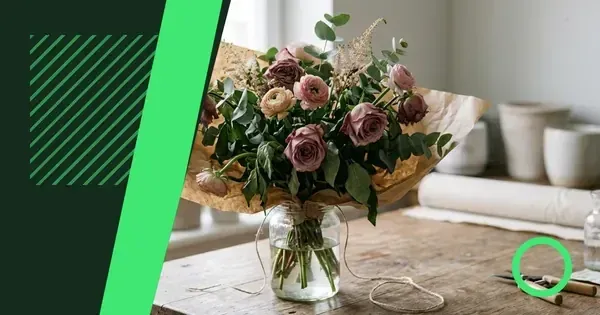
 Flower CareRevival steps for wilted delivery flowers and 5 signs they'll bounce back
Floristry and Design Studio
- Flower CareRevival steps for wilted delivery flowers and 5 signs they'll bounce back
 Working with FloristsWhat happens at a floristry consultation: the 6 questions your florist will ask
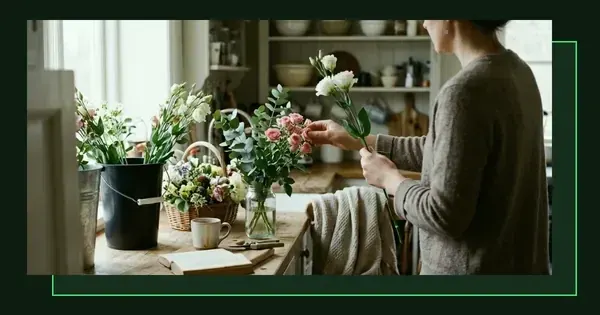 Buying FlowersSigns of freshness to look for when choosing flowers that last
 Working with FloristsFlorist vs Floral Designer: Training, Scope and the 5 Services That Separate Them
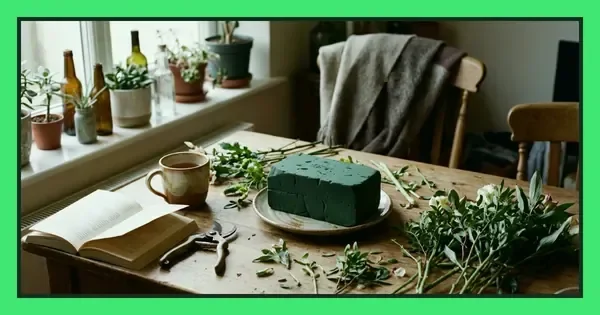 Tools and MaterialsWhat floral foam is and why florists are rethinking it
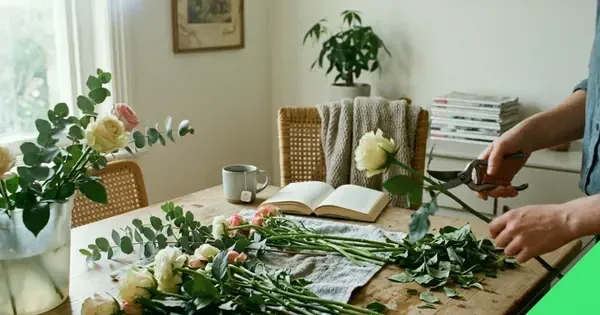 Flower CareConditioning flowers: 6 prep steps for stronger stems and longer vase life
 Arranging TechniquesHand-tied bouquet technique: 7 steps to a balanced design
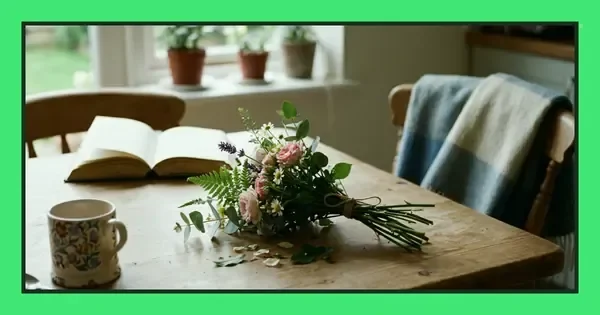 Arranging TechniquesWhat a posy is and how to arrange one in 6 steps
Flower Care

Working with Florists
- Working with FloristsWhat happens at a floristry consultation: the 6 questions your florist will ask
- Working with FloristsFlorist vs Floral Designer: Training, Scope and the 5 Services That Separate Them
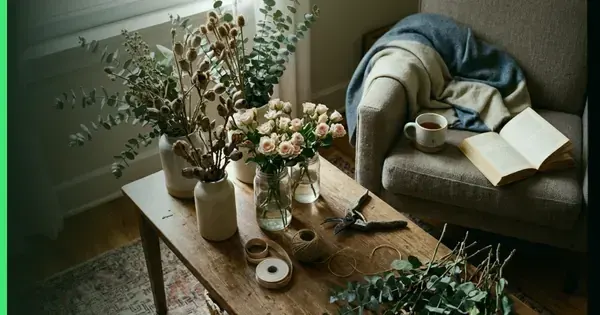 Working with FloristsFloristry services and design options
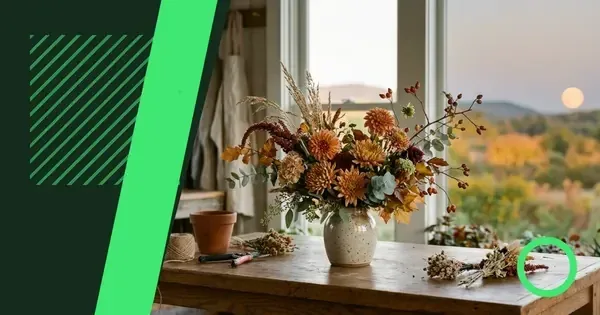 Working with FloristsAbout Harvest Moon Floral Art
Floristry bridges nature and design, turning seasonal stems into arrangements that mark moments or refresh a room. A hand-tied bouquet for a birthday, a foraged centrepiece for a dinner table, or a statement installation for a wedding—each one asks you to think about colour, texture, scale and the story the flowers tell. Working with flowers means working with something alive: stems that change as they open, foliage that lasts longer than petals, and materials that behave differently depending on the season and how you handle them.
Common mistakes in floral design
Overcrowding a vase flattens the impact of individual blooms. Flowers need space to show their shape; cramming too many stems into one container creates a dense mass where nothing stands out. Step back and remove a third of what you first placed.
Ignoring stem preparation shortens the life of an arrangement. A stem cut at an angle under running water draws more moisture than one snapped or crushed. Stripping leaves below the waterline prevents bacterial growth that clouds the water and blocks the stems.
Choosing flowers without considering their stage costs you days of display. A rose still in tight bud may never open indoors; a lily shedding pollen has already peaked. Select stems that are just starting to unfurl, with colour visible but petals not yet fully open.
Seasonal mismatch
Forcing summer palette in winter feels disconnected from the moment. Dahlias and sunflowers belong to long daylight and warm soil; forcing them into December through imports ignores what grows naturally around you. Winter offers hellebores, evergreen foliage, berried branches and early forced bulbs—materials that suit the light and the mood.
Neglecting mechanics
Arrangements that rely on hope rather than structure collapse within hours. Floral foam, chicken wire, pin frogs and grid tape exist because gravity and water movement are constant. A tall stem in a narrow vase tips; a heavy head on a weak stem droops. Anchor your materials before you arrange them.
Where to go next with your practice
Foraging trains your eye faster than buying does. A walk through a hedgerow or a park in any season gives you material most florists overlook: lichen-covered twigs, rosehips, cow parsley seed heads, trailing ivy, catkins. Foraging teaches you to see structure and texture before colour, and to work with what a place offers rather than what a wholesaler stocks.
Experimenting with a single variety in quantity builds confidence with form. Five stems of one type—all eucalyptus, all tulips, all thistles—force you to rely on placement and height rather than mixing your way to interest. You learn how a stem moves, how much water it drinks, and what it does as it ages.
Observing arrangements in non-floral contexts expands your design language. The way vegetables are piled at a market, how books are stacked on a shelf, the rhythm of fence posts along a field—all of them demonstrate balance, repetition and asymmetry. Floral design borrows from sculpture, still life painting and architecture; looking outside the discipline sharpens your own work.
Working to a brief
Client work asks you to interpret someone else's vision within practical limits. A bride describes "romantic but not fussy"; a corporate event planner wants "bold and modern" for a venue you have not seen. Learning to ask the right questions—about colour restrictions, venue conditions, budget per stem—and to translate abstract words into material choices separates hobbyists from working florists.
Documenting your arrangements
Photographing your work creates a record that memory will not. Flowers change hour by hour; a photograph taken when the arrangement is fresh captures decisions about placement and proportion that fade once the blooms have shifted or dropped. Natural light, a plain background and a straight-on angle let the arrangement speak without distraction.
Foundations of floral composition
Every arrangement starts with a focal point—the area where the eye lands first. Typically this sits slightly off-centre and lower than the tallest stems, created by the largest or most visually dominant bloom. Supporting flowers and foliage radiate outward from that point, decreasing in size and visual weight as they move toward the edges.
Odd numbers feel more natural than even ones. Three roses, five stems of delphinium, seven sprigs of lavender—the asymmetry prevents the static feel of pairs. Grouping like materials together rather than scattering single stems throughout creates rhythm and lets each type register clearly.
Texture matters as much as colour. A composition of all smooth petals—roses, peonies, ranunculus—lacks contrast; adding spiky eryngium, feathery astilbe or papery honesty seed pods gives the eye somewhere to rest and move. Foliage is not filler; it provides structure, frames blooms and often lasts longer than the flowers themselves.
Line, form and mass
Line flowers—gladioli, delphiniums, snapdragons—establish height and direction. Form flowers—lilies, tulips, irises—draw the eye with distinct shapes. Mass flowers—hydrangeas, carnations, chrysanthemums—fill space and provide volume. A balanced arrangement uses all three categories, though not always in equal measure.
Colour theory in practice
Monochromatic schemes in varying tones create sophistication without needing complex technique. All whites with green foliage, all purples from pale lilac to deep aubergine, all yellows from cream to saffron—limiting the palette lets form and texture lead. Analogous colours—those next to one another on the wheel, such as pink through red to orange—flow naturally. Complementary pairs—purple and yellow, blue and orange—create tension that demands skillful balancing.
| Design principle | How it shapes an arrangement | Common error |
|---|---|---|
| Balance | Visual weight distributed so the eye does not tip to one side | Placing all large blooms on one side |
| Proportion | Container height to stem length—roughly one-and-a-half times for most designs | Stems too short for the vase, making the arrangement squat |
| Rhythm | Repetition of colour, shape or material that guides the eye through the piece | Every stem a different variety with no unifying element |
| Focal point | One area of dominance where the largest or boldest element sits | Equal emphasis throughout, flattening the composition |
Practical steps for building an arrangement
Condition your stems before you begin. Cut each one at a sharp angle under cool running water, strip foliage from the lower third, and let them stand in deep water for at least two hours. Woody stems—roses, lilac, viburnum—benefit from a vertical slit up the base or a light crush with a hammer to expose more surface area.
Prepare your mechanics once the stems are conditioned. If using floral foam, soak it until it sinks naturally—forcing it under water traps air pockets that leave stems dry. For chicken wire, crumple it loosely into the vase and secure it with tape across the rim. Pin frogs sit at the base of shallow bowls; grid tape works for wide-mouthed containers.
Start with foliage to establish the outline. Greenery sets the shape and scale before flowers go in, and gives you a framework to build against. Place the tallest pieces first to define height, then shorter sprigs to create width and depth.
- Insert your focal flowers next, angling them slightly toward the viewer and clustering them near the centre or just off it.
- Add line flowers to establish vertical or diagonal movement, using their natural curves rather than forcing them straight.
- Fill remaining gaps with mass flowers and secondary foliage, turning the arrangement as you work to check it from all sides.
- Step back every few stems—proximity distorts judgment, and you will spot imbalance or crowding more easily from two metres than from twenty centimetres.
- Top up the water once the arrangement is complete, and check it daily—flowers drink heavily in the first 48 hours.
Extending the life of cut flowers
Cool conditions slow everything down. A room at 15–18°C will keep an arrangement fresh twice as long as one at 23°C. Keep flowers away from direct sunlight, ripening fruit—which releases ethylene gas that ages blooms—and heating vents. Change the water every two days, re-cutting stems each time to remove the sealed end.
Choosing vessels
The container is half the composition. A clear glass cylinder suits modern, minimal designs where stems are part of the aesthetic. Ceramic or opaque glass hides mechanics and works for traditional, domed shapes. Low bowls favour horizontal, garden-style arrangements; tall vases support vertical, architectural designs. The vessel's colour, finish and proportion must support the flowers, not compete with them.
Tools and materials for working florists
Sharp secateurs make clean cuts that do not crush stems. Blunt blades damage the vascular tissue and shorten vase life; a clean cut draws water efficiently. Japanese floral shears with short, curved blades give more control for delicate stems.
Floral tape in green or brown secures mechanics and binds bouquets without the bulk of string. It sticks to itself when stretched and holds firmly once pressed. Wire—available in gauges from 18 (thick, for heavy stems) to 28 (fine, for delicate work)—supports weak stems or creates false stems for flowers like orchids.
A floral frog (kenzan) anchors stems in shallow arrangements where foam would be visible. The heavy metal base holds a grid of brass pins that grip stems at any angle. Chicken wire, crumpled into a loose ball, offers flexible support inside vases and jugs without the environmental cost of foam.
- A water mister keeps foliage fresh during assembly and revives arrangements between water changes.
- Buckets in several heights let you condition stems at the length you will use them, rather than bending tall branches into short containers.
- A lazy Susan or turntable lets you rotate the arrangement as you build, ensuring balance from every angle without lifting and repositioning a heavy vase.
Sustainable alternatives
Floral foam persists in landfill for decades and sheds microplastics into waterways. Chicken wire, pin frogs and grid tape all work as well or better for most designs and can be reused indefinitely. Compostable foam exists but breaks down only in commercial facilities, not home compost bins.
Sourcing stems responsibly
Locally grown flowers carry lower environmental cost than airfreighted imports, and British-grown stems often last longer because they travel shorter distances between cutting and arranging. Seasonal availability means your palette shifts through the year—tulips and daffodils in spring, peonies and sweet peas in early summer, dahlias and rudbeckia in autumn, hellebores and amaryllis in winter. Growing your own cutting garden, even a small bed, gives you control over variety and timing.
Frequently asked questions
What tools do I need to start arranging flowers at home?
Sharp secateurs or floral scissors, a selection of vases in different heights, floral tape for securing stems, and either a pin frog or chicken wire for mechanics. A water mister and a few buckets for conditioning complete the basics.
How do I make cut flowers last longer in a vase?
Cut stems at an angle under running water, strip foliage below the waterline, and place them in a cool room away from direct sun and fruit. Change the water every two days and re-cut the stems each time to keep them drawing moisture efficiently.
Can I use floral foam for all arrangements?
Floral foam works for certain designs but persists in landfill and sheds microplastics. Chicken wire, pin frogs and grid tape offer reusable, effective alternatives for most arrangements and are better for the environment.
Where can I find flowers if I do not have a garden?
Foraging from hedgerows and parks provides foliage, berries and seed heads year-round. Farmers' markets and local growers often sell British-grown seasonal stems, and wholesale flower markets are open to the public in most cities.
How do I choose colours that work together?
Monochromatic schemes in varying tones create easy sophistication. Analogous colours—those next to each other on the colour wheel—flow naturally, while complementary pairs like purple and yellow create bolder contrast that needs careful balancing.
What is the difference between line, form and mass flowers?
Line flowers such as delphiniums establish height and direction. Form flowers like lilies draw attention with distinct shapes. Mass flowers such as hydrangeas fill space and provide volume. Balanced arrangements use all three types.
How much water do cut flowers actually drink?
Flowers drink heavily in the first 48 hours after cutting, sometimes draining a vase by half. Check the water level daily and top it up to keep stems fully submerged, especially during warm weather.